

Stryker
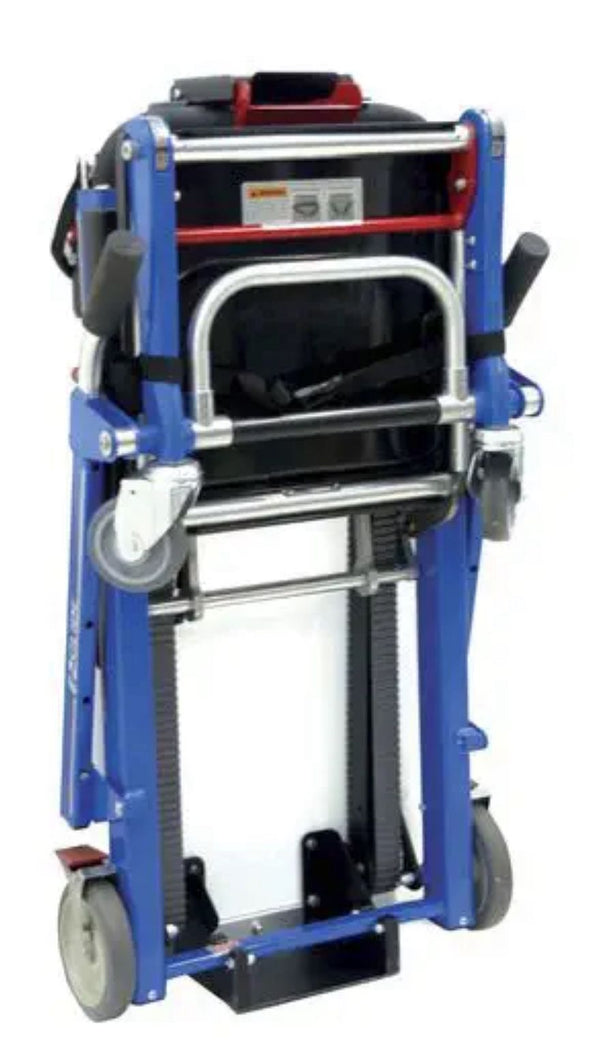
Stryker Stair-Pro 6252 Stair Chair - 500 Lb Capacity - New & Refurbished Options
From $2,159.10 $2,399
How many flights of stairs does your crew actually carry a patient down on a bad day, and does your current EMS stair chair make that job safer or scarier? That answer tells you most of what you need to know about which model belongs on your rig. Some chairs are built to glide down stairs on a track with minimal lifting. Others rely on the strength of the operators and nothing else. The right pick depends on your call volume, your building types, and honestly, the backs of the people doing the lifting.
The job sounds simple. Get a seated patient down a staircase without dropping them or wrecking your own spine. In practice it's rarely that clean.
You're dealing with narrow turns, worn carpet, patients who can't hold still, and sometimes a landing the size of a doormat. A good EMS stair chair keeps the patient secured and the weight controlled through every step. The difference between a cheap chair and a serious one shows up at that moment, on the fourth-floor walkup, at 3 a.m., with a partner who's running on no sleep.
Here's the split most buyers end up weighing. Track-equipped and powered chairs use a belt or powered drive that rides the stair edges, so the chair does a lot of the braking for you. Manual carry chairs don't. They lean on operator technique and grip.
If your agency does high call volume or works a lot of multi-story buildings, the track or powered style is the smarter buy. It cuts the lifting load and lowers the odds of a drop. Manual chairs are lighter, cheaper, and faster to store, and they're fine for lower-volume squads or departments that mostly run single-level homes.
Our listings cover Stryker Stair-PRO chairs (models 6250, 6251 and 6252), Ferno stair chairs including the Model 40, 42 and 48 and the 40-OS, the Ferno Transcend stair chair, and powered options such as the Stryker Xpedition powered stair chair and the Ferno POWERTraxx powered evacuation stair chair. Check each product page for capacity and features.
EMS agencies and ambulance services are the obvious crowd. They need a chair that folds flat, rides well in the patient compartment, and holds up to daily abuse.
Fire departments running medical calls want the same durability plus fast deployment. Hospitals and nursing facilities use stair chairs for evacuations and for moving patients when an elevator's down or off limits. First aid squads and volunteer corps often shop a little tighter on budget, which is where a refurbished or used unit can make sense. Condition varies by listing, so check each one before you commit.
You can see how stair chairs fit alongside the rest of a transport setup by browsing our Stryker Stair Chairs, Ferno Stair Chairs and Motorized Stair Chairs collections, along with our Ambulance Stretchers.
A few things separate a chair you'll trust from one you'll fight with.
Weight capacity first. Confirm the rated load matches the patients you actually see, not an average day. Restraint quality matters just as much, because a chair that holds the patient firmly lets both operators focus on footing instead of catching someone sliding forward. Look at the fold and carry weight too, since a chair that's a pain to deploy tends to stay bolted to the wall.
Ask about wear parts. Straps fray, track belts age, and replacement handles matter down the road. For agencies standardizing a fleet, buying the same model across every rig keeps training simple and parts interchangeable.
We sell a mix, and each has a place. A new chair gives you the full service life. A refurbished unit has been brought back to working order, and it's usually the value play for squads watching the budget.
My plain take: if a refurbished chair checks out on inspection, there's no shame in it. Just read the condition notes on each listing and confirm what's included before you order.
Capacity varies by model. For example, the Stryker Stair-PRO chairs are listed at 500 lb and the Ferno Model 40, 42 and 48 at 350 lb. Always confirm the rated load on the specific listing and match it to your heaviest realistic call.
A track chair uses a belt that grips the stair edges and handles much of the controlled descent, reducing operator lifting. A manual chair relies on the crew's strength and technique. Track and powered models ease the load on multi-story and high-volume calls.
EMS agencies, fire departments running medical calls, hospitals, nursing homes, and first aid squads all use them. Any team that moves seated patients through stairwells benefits from one.
For budget-conscious squads, it can be, as long as the condition is documented on the listing. Check the listing details and included components before you commit.