An automated external defibrillator (AED) analyzes a person's heart rhythm and, if it finds a shockable rhythm, delivers a shock to restore a normal heartbeat. Modern AEDs guide the rescuer through every step with voice prompts, so they are built to be used by people with little or no training. For a school, gym, office, church or community building, the question is not whether an AED is worth having but which one, how many, and what it takes to keep it ready.
Semi-Automatic or Fully Automatic
A semi-automatic AED analyzes the rhythm and, if a shock is advised, tells the rescuer to press a button to deliver it. A fully automatic AED, such as the LIFEPAK CR Plus fully automatic model, warns everyone to stand clear and delivers the shock on its own. Both are effective. Some organizations prefer fully automatic so nobody has to hesitate in the moment; others prefer semi-automatic so the rescuer stays in control. Trained responders are generally comfortable with either.
Models You Will See Most
- Philips HeartStart OnSite and FRx. Lightweight, simple and widely used in public buildings. The FRx is the more rugged of the two and is often chosen for gyms, schools and outdoor settings.
- Stryker LIFEPAK CR Plus and CR2. Clear prompts and a long history in public-access programs.
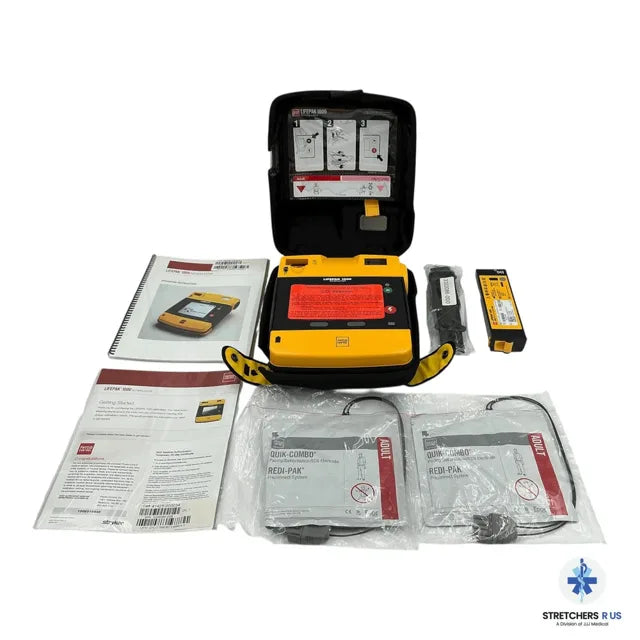
- Stryker LIFEPAK 1000. A step up toward professional use, with a screen that shows the rhythm, so it suits facilities with nursing staff or trained responders on site.
- ZOLL AED Plus. Gives real-time CPR feedback on compression depth and rate, which helps untrained rescuers.
What You Will Replace Over Time
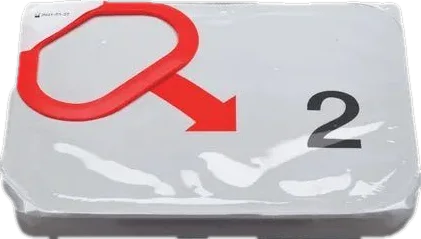
- Electrode pads. Single-use and dated. Most expire in two to five years; the date is printed on the package.
- The battery. Also has a service life, usually several years in standby. The AED runs a self-test and shows a status indicator; when it stops showing ready, the battery is the usual reason.
- Pediatric pads or a child key. Needed if children may be present, such as schools, daycares and youth sports.
Put the expiry dates on a calendar the day the AED arrives. An AED with expired pads is the most common reason a unit is not ready when it is needed.
Where to Put It
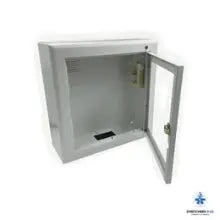
The goal is to get the AED to the patient within about three minutes of collapse. Mount it where people can reach it quickly from anywhere in the building, in a visible spot near the main traffic path rather than in a locked office. A wall cabinet with an alarm deters theft and alerts staff when the unit is removed. Larger buildings, multi-story buildings and campuses often need more than one; count the walking time, not the square footage.
Training and Readiness
AEDs are designed for untrained users, but a short CPR and AED class makes responders faster and calmer. Assign someone to check the status indicator monthly and to track pad and battery dates. Keep a basic response kit with the AED: gloves, a razor for chest hair, scissors and a barrier mask.
Rules Vary by State
Some states have requirements for registering an AED with local EMS, for training, for medical oversight or for signage. Check your state's rules before you buy so the program is set up correctly from the outset.
New or Recertified
We sell AEDs new and recertified. A recertified AED has been inspected and function-tested before it ships, and includes our 1 year warranty. For a facility buying several units, recertified units allow the same budget to cover more locations.
For guidance on which model fits your building, call 800-282-9352 and describe the installation site.