Bariatric Patient Lift for Sale: Powered Models Built for Heavier Transfers
3 products
Showing 1 - 3 of 3 products
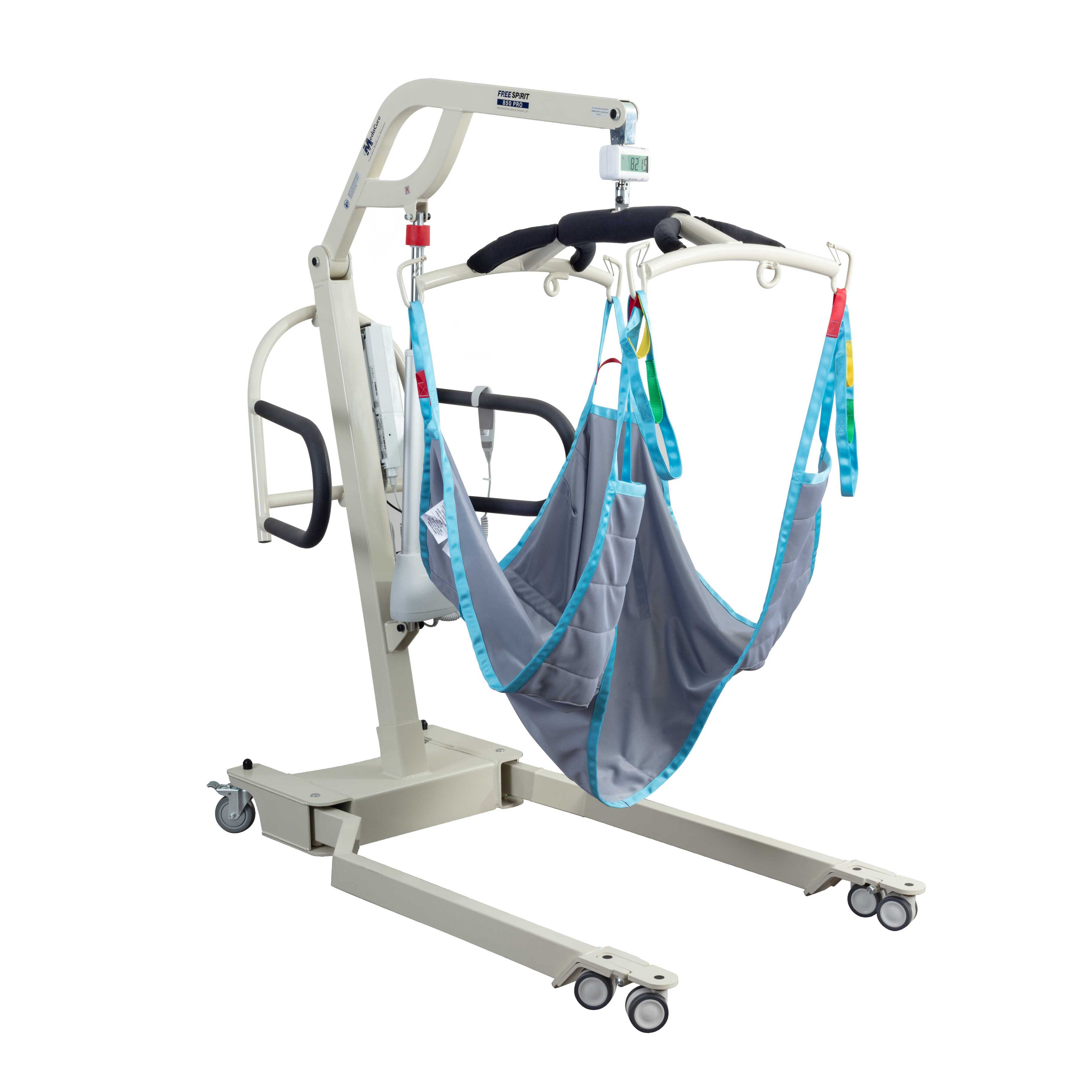
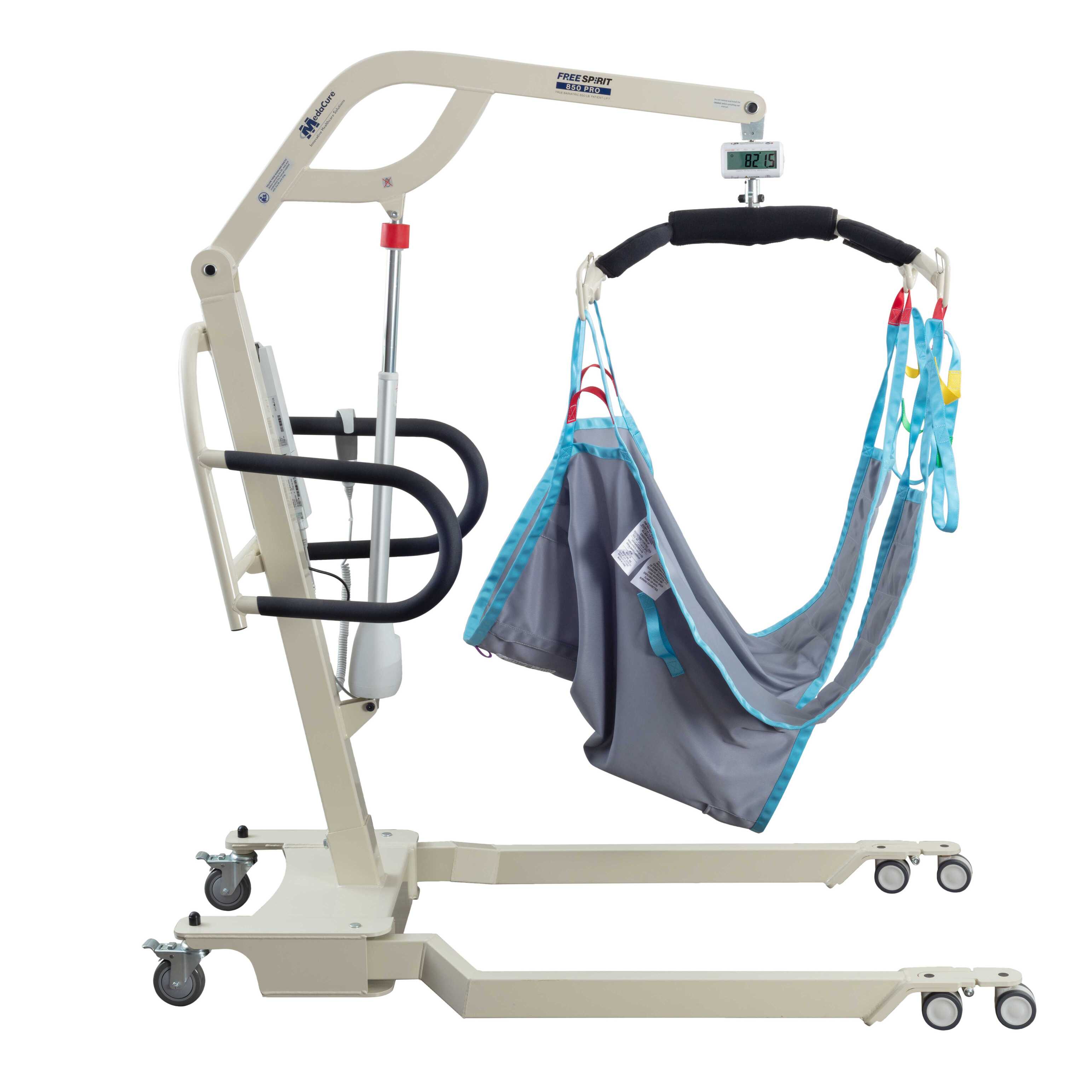
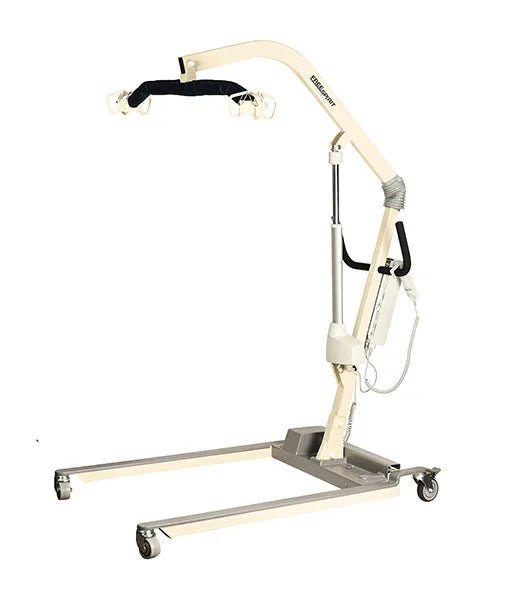
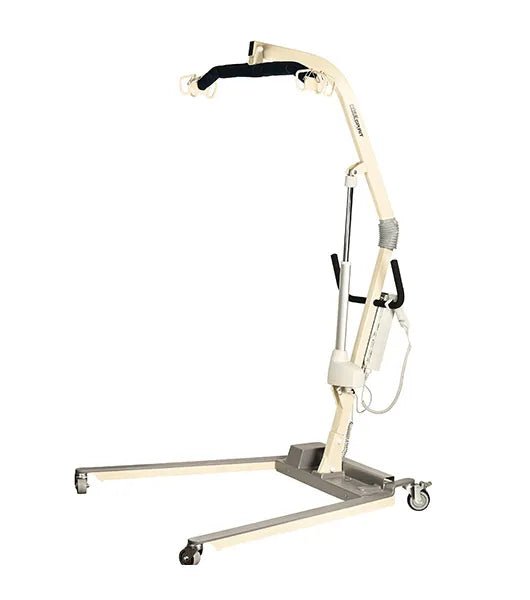
The wide spread of the legs on a bariatric patient lift tells you everything before you read a single spec, that low, stable base is engineered to keep the load balanced when you're moving someone who weighs far more than a standard sling ever accounts for. That geometry isn't cosmetic. It's the difference between a smooth transfer and a lift that feels tippy under real weight. Every model we stock in this category runs on battery power for exactly that reason.
Why a Bariatric Patient Lift Isn't Just a Bigger Version of a Standard One
Capacity is where people start, and they stop too soon. A heavier-duty frame reinforces the mast, the boom, and the caster mounts, so the whole structure holds up when the sling is loaded to its limit. Standard lifts flex under weight they were never rated to carry. That flex is what fails.
Powered actuation matters more here than in any other lift category. Cranking a manual lift by hand under a heavy load puts strain on the caregiver and slows the transfer down, which is when small mistakes happen. A battery-powered bariatric patient lift handles the raise with a motor, so the caregiver is guiding and steadying instead of muscling the arc upward.
The MedaCure Free Spirit Bariatric Lift Range
We carry three battery-powered bariatric models, and each one solves a slightly different transfer problem.
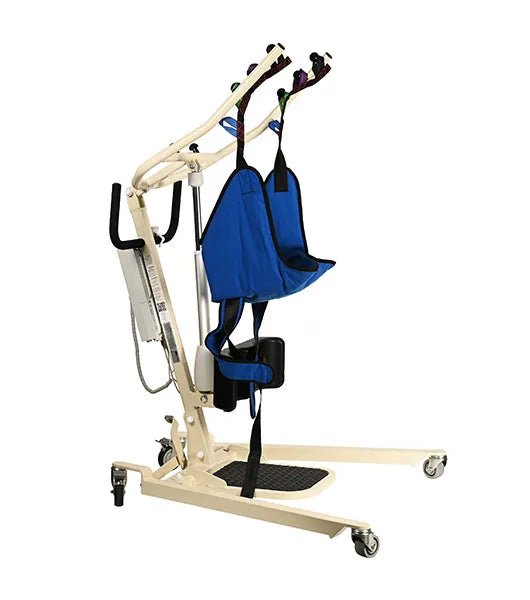
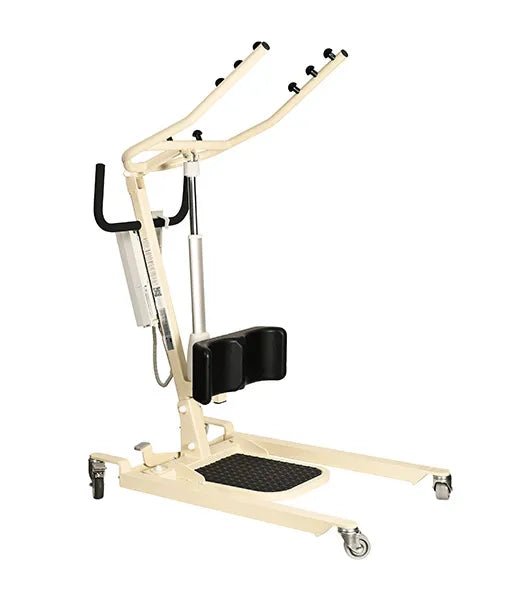
The FS660-L Bariatric Battery Powered lift is the full-body option for caregivers moving non-weight-bearing patients bed to chair. The FS850 Pro True Bariatric is the heaviest-rated unit in the group, built to handle up to 850 lbs. And the FS600STS-L Bariatric Sit-to-Stand is the one you'd reach for when a patient can bear some weight and just needs support standing and pivoting.
Sit-to-stand and full-body aren't interchangeable. A sit-to-stand keeps the patient more upright and active, which is good for anyone doing rehab or retaining mobility. Full-body handles the patient who can't assist at all. Pick based on the patient's ability, not on which one looks like it does more.
Who Buys a Bariatric Patient Lift
Hospitals and acute care units order these to standardize safe patient handling across a floor, since a mixed patient population means staff can't count on a standard lift being enough. Long-term care and rehab facilities use them daily, so durability under repeated cycles is the priority.
Home care is the group people forget. Families caring for a heavier relative at home need a lift that one or two caregivers can operate safely, and the powered models make that realistic where a manual crank wouldn't be. Home buyers should think hard about ceiling height, doorway width, and how the base clears under a bed or chair before ordering.
What to Look For When You Buy a Bariatric Patient Lift
Start with the rated capacity and give yourself a margin above the heaviest patient you expect to move. Buying a lift that clears the maximum by a comfortable cushion protects both the equipment and the person in the sling.
Look at the caster size and how the base spreads. A wider, low base under load is what keeps the whole thing stable during the pivot, and cheaper frames skimp there. Sling compatibility is the piece people skip, so confirm the sling style matches the lift and the patient before you order — the patient lift slings range covers the options. You'll also want to think about how the powered actuator is serviced, because a lift that can't be maintained is a lift you'll replace early.
If you're outfitting a facility, pair the lift with the right support surface for heavier patients. Our bariatric beds are sized and reinforced for the same patient population, and the MedaCure full-electric HCFE42, HCFE48, and HCFE54 beds run 42, 48, and 54 inches wide. Worth planning both together so your handling and your bedding match.
Battery-Powered vs Manual: Why We Don't Sell a Manual Bariatric Lift
Here's my honest take. For heavier patients, powered is the only option I'd recommend, and it's why every bariatric patient lift we carry runs on a battery.
Our manual lifts, the Free Spirit FS450-H Hydraulic and the FS400-STS Sit-to-Stand, are solid for standard-weight transfers and lower-volume settings. But asking a caregiver to hand-pump a heavy load repeatedly is how backs get hurt and transfers go wrong. The math changes fast once you're moving real weight. A powered lift pays for itself in reduced injury risk and faster, safer transfers, which is exactly what a bariatric patient lift needs to do every shift without excuses.
Bariatric Patient Lift FAQ
Q: What weight can a bariatric patient lift handle?
A: It depends on the model, but our FS850 Pro True Bariatric is rated up to 850 lbs, which is the heaviest capacity in our current lineup. Always choose a lift that clears the weight of your heaviest expected patient with room to spare.
Q: What's the difference between the full-body and sit-to-stand bariatric models?
A: The full-body FS660-L supports patients who can't bear their own weight and need a lift bed to chair. The sit-to-stand FS600STS-L is for patients who can bear some weight and need help standing and pivoting, which keeps them more active during the transfer.
Q: Is a bariatric patient lift right for home use?
A: Yes, and the battery-powered models make it practical for one or two caregivers at home where a manual crank wouldn't be safe under heavier loads. Just measure your doorways, ceiling clearance, and the space under beds and chairs before you order.
Q: Why don't you offer a manual bariatric lift?
A: Hand-pumping a lift under heavy weight is slow and hard on the caregiver, which raises injury risk during exactly the transfers where you want control. For bariatric loads, powered actuation is safer and faster, so every bariatric lift we carry is battery powered.