Shop the Manual Patient Lift Range for Safe Transfers
2 products
Showing 1 - 2 of 2 products
A caregiver getting a client out of bed at 6 a.m., no wall outlet nearby and no dead battery to curse at, is exactly the person a manual patient lift is made for. On the hydraulic model, you pump the handle, the boom rises, the transfer happens. There's nothing to charge, nothing to plug in, and one less thing to fail on you when you're already tired. That's the appeal, and it's a real one.
Why a Manual Patient Lift Still Earns Its Place
Power everywhere, all the time, isn't the reality in a lot of home care settings. Bathrooms are cramped, outlets are across the room, and a caregiver may be doing two or three transfers a day rather than twenty. In that situation a non-powered lift makes sense.
The non-powered design is simple on purpose. Fewer parts, no charging schedule, and a mechanism that's been around long enough to be well understood by the people servicing it. Simple tends to last.
The Two MedaCure Manual Patient Lift Models We Carry
We stock two non-powered options in this collection, both from MedaCure's Free Spirit line.
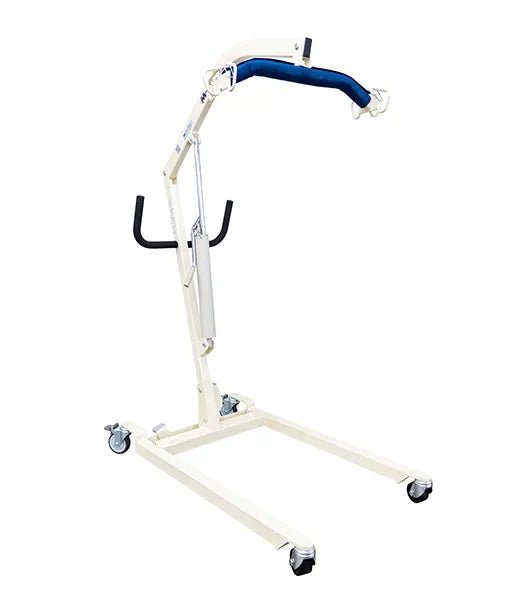
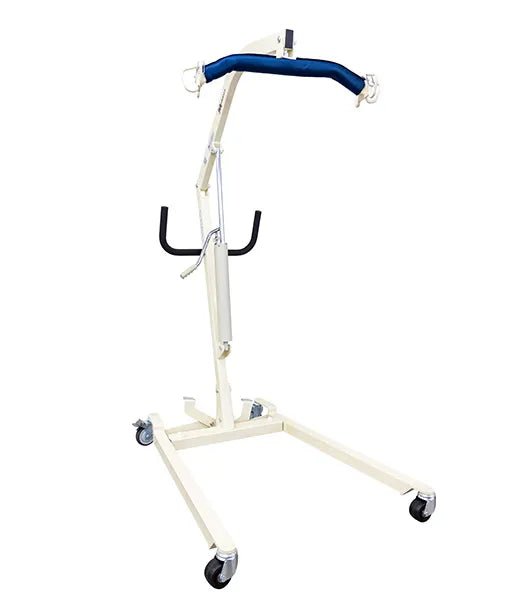
The FS450-H Deluxe Hydraulic Manual Patient Lift is the full-body style. You lift and reposition a client using a sling, and the hydraulic pump does the raising. It's the type of lift you'd reach for when someone can't bear their own weight and needs a full transfer from bed to chair.
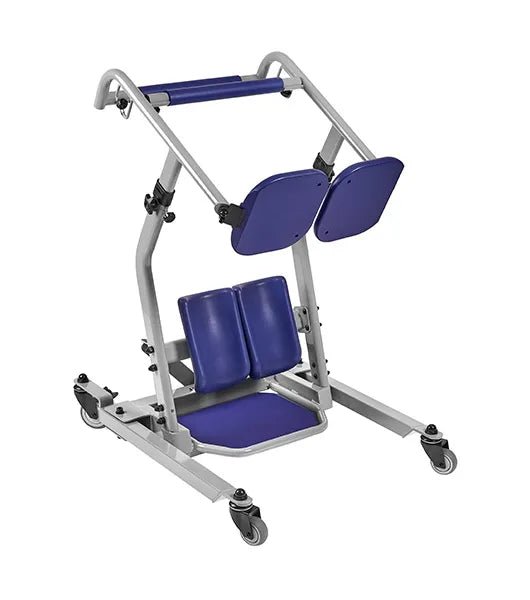
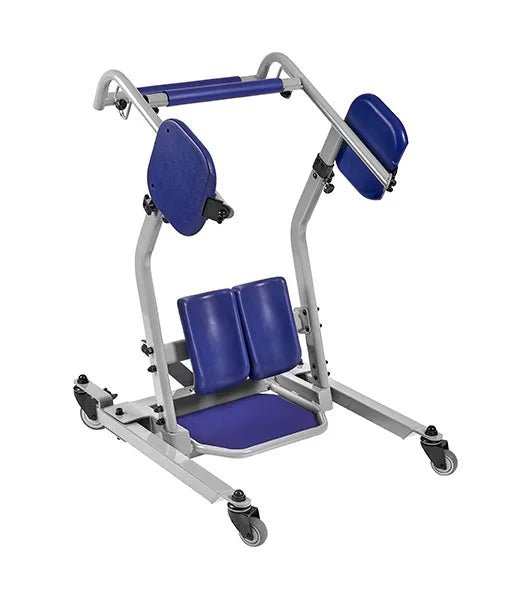
The FS400-STS Manual Sit-to-Stand Transfer Lift is a different tool for a different client. Sit-to-stand suits someone who has some leg strength and can help with the motion but needs assistance getting up and steady. It's quicker for short transfers, toileting included, and it keeps the caregiver from doing all the lifting alone.
Every other lift we carry runs on a battery, so if you specifically want non-powered, these two are your options.
Who's Buying a Manual Patient Lift
Home care is the biggest audience here. Families caring for a parent, private-duty aides, and small in-home setups where a battery lift is more machine than the routine calls for.
Smaller care facilities buy them too, usually as a backup or for rooms where power access is awkward. And budget matters. A manual unit generally costs less up front than a comparable powered one, which makes it an easier purchase when a single client needs a lift now.
If you're running high transfer volume across a floor of patients, though, a manual crank gets old fast for staff. Volume is where powered wins.
What to Look For in a Non-Powered Patient Lift
Start with the client, not the spec sheet. Someone with zero weight-bearing ability needs full-body support, which points you to the hydraulic style. Someone who can partially stand is a candidate for sit-to-stand, and that's the more comfortable, faster option when it fits.
For the FS450-H, check the sling situation. A lift is only as good as the sling paired with it, and the wrong size or style makes a safe design feel unsafe. Match the sling to the person, and browse the patient lift slings range alongside the lift.
Doorway and floor clearance are the details people skip. Measure the narrowest passage the lift has to clear and the space under the bed where the legs need to slide. A lift that won't fit the room is money spent twice.
If you're weighing a lift against other transfer gear, our full electric hospital bed collection covers the rest of the room, and heavier clients should look at our bariatric patient lift options, all of which are powered.
Manual vs Battery Powered: My Honest Take
Here's the plain version. Buy a manual patient lift when transfers are occasional, budget is tight, and you don't want to babysit a charging routine. It's the sensible pick for most single-client home setups.
Go battery powered when you're doing frequent transfers, when staff fatigue is a real concern, or when the client is on the heavier side. All of our bariatric lifts are powered for good reason, since cranking a larger patient by hand isn't fair to anyone doing it.
Neither is better across the board. The right one is the one that matches how often you'll actually use it. Take a look at both Free Spirit models below and see which fits your client.
Manual Patient Lift FAQ
Q: What's the difference between a hydraulic and a sit-to-stand manual patient lift?
A: A hydraulic full-body lift raises a client fully supported in a sling, which suits someone who can't bear weight. A sit-to-stand assists a person who has some leg strength through the standing motion, and it's faster for short transfers like toileting.
Q: How many manual patient lift models do you carry?
A: Two non-powered options, both MedaCure Free Spirit: the FS450-H Deluxe Hydraulic and the FS400-STS Sit-to-Stand Transfer Lift. Every other lift in our catalog runs on a battery.
Q: Is a manual patient lift right for a home care setting?
A: For most single-client homes, yes. It costs less up front, needs no charging, and handles occasional transfers well. If you're moving a client many times a day or the client is heavier, a powered lift is the better call.
Q: Do you offer a bariatric manual patient lift?
A: No. Our bariatric lifts are all battery powered, including the FS850 Pro True Bariatric rated to 850 lbs. Cranking a heavier patient by hand puts too much strain on caregivers, so we keep bariatric transfers on powered units.