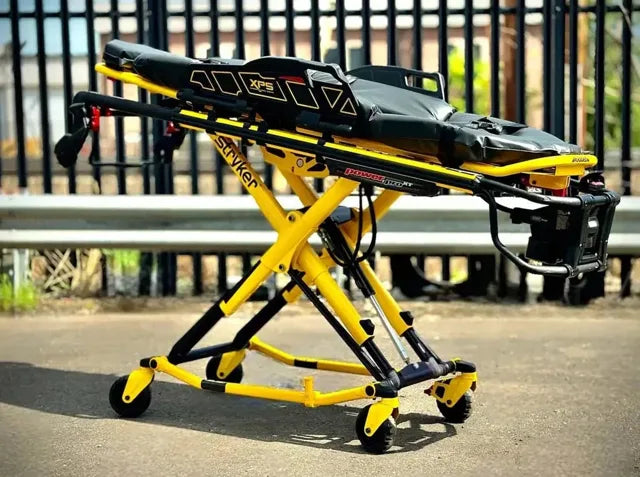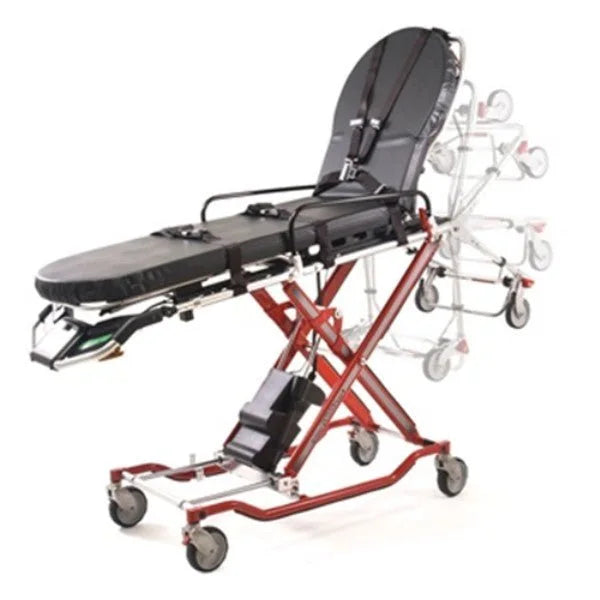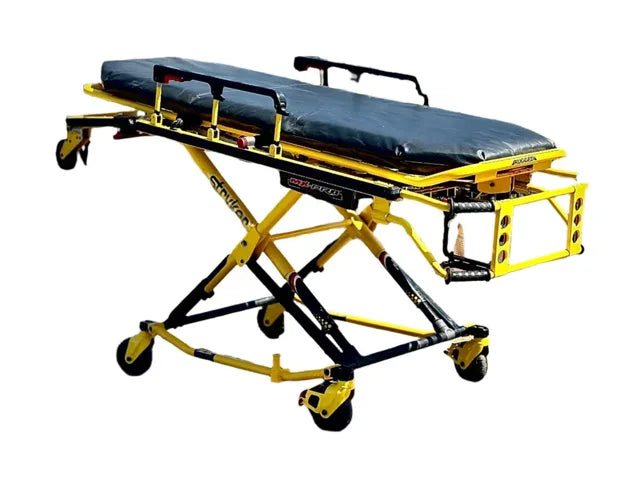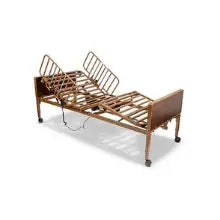

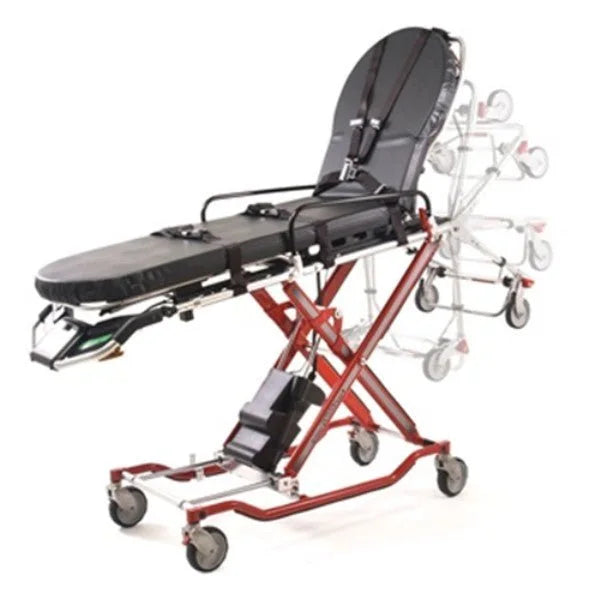
A powered ambulance cot uses a battery-driven hydraulic system to raise and lower the patient at the push of a button. A manual cot relies on the crew to lift. Both get the patient to the hospital safely; the difference is what they cost up front, what they cost to keep running, and what they save in crew strain over the life of the unit. This guide walks through both sides so you can decide for your service rather than for the average one.
Shop Powered CotsShop Manual Cots
How Each Type Works
A manual cot such as the Stryker Performance-PRO XT or MX-PRO, or the Ferno ProFlexx, uses a spring-assisted or hydraulic undercarriage that the crew raises and lowers by releasing a lever and lifting. With a patient on board, two people lift. There is nothing to charge and nothing electronic to fail.
A powered cot such as the Stryker Power-PRO XT or Power-PRO 2, or the Ferno Power X1 and POWERFlexx, has a battery-powered hydraulic lift. The crew presses a button and the cot raises or lowers itself, with the patient on it. Every powered cot still has a manual backup for when the battery is depleted, so a dead battery slows the crew but does not strand it.
Why Agencies Move to Powered Cots
Lifting is one of the most common causes of back injuries in EMS, and a loaded cot is the heaviest lift most crews make. A powered cot takes nearly all of that lift off the crew. That matters most when:
- Call volume is high, so each crew makes many lifts per shift.
- Bariatric transports are common. Powered cots are typically rated to 700 lb and lift that weight with the same button press.
- Crews are small or mixed in size and strength.
- You want to pair the cot with a powered loading system such as the Stryker Power-LOAD, which lifts the cot into the ambulance as well, so nobody lifts at all.
Fewer lift injuries means fewer lost shifts and lower workers' compensation exposure. For many services that alone pays the difference in price.
Why Manual Cots Still Make Sense
Manual cots cost far less to buy, weigh less, and have no batteries, chargers or control boards to manage. Maintenance is mechanical and simple. They make sense when:
- Call volume is low, so the lift count per shift is small.
- The cot is a backup or a spare for a reserve rig.
- The service runs non-emergency transport with two-person crews and mostly ambulatory patients.
- Budget is the deciding factor and a recertified manual cot gets a reliable unit on the truck now.
What a Powered Cot Adds to Your Upkeep
Powered cots are not maintenance-free. Plan for batteries that need charging every shift and replacing every few years, a charger per station, and hydraulic and electrical components that need periodic service. The lift mechanism also has sliders and bearings that wear, the same as a manual cot. None of this is difficult, but someone on your team must be responsible for it.
Fastening and Loading Systems
Whichever cot you choose, it has to lock into the ambulance. Stryker cots use the Power-LOAD (powered) or Performance-LOAD (manual) fastener; Ferno cots use the PRO F1 or the Stat Trac and 175-series rail systems. Current Stryker powered cots are built with compatibility for both Stryker fasteners; older cots and some manual cots need a compatibility kit. If you are replacing a cot in a truck that already has a fastener, tell us which fastener is installed and we will confirm the match before you order.
New or Recertified
Both types are available new or recertified. A recertified cot has been inspected, repaired with replacement parts where needed, cleaned and function-tested by our technicians before it ships; it may show light cosmetic wear and includes our 1 year warranty. New cots carry the manufacturer's warranty. For a manual cot the savings on recertified are significant; for a powered cot they are larger still.
Questions to Ask Before You Buy
- How many calls does each unit run per day, and how many of those involve a loaded lift?
- How often do you transport bariatric patients, and what capacity do you need?
- What fastener is already in the truck, and does the cot need to match it?
- Who will charge, track and replace batteries on a powered cot?
- Do you want to add a powered loading system now or later?
- Is this a frontline unit or a spare?
If you are unsure which fits, call 800-282-9352 and we will review the options for the trucks you run.