
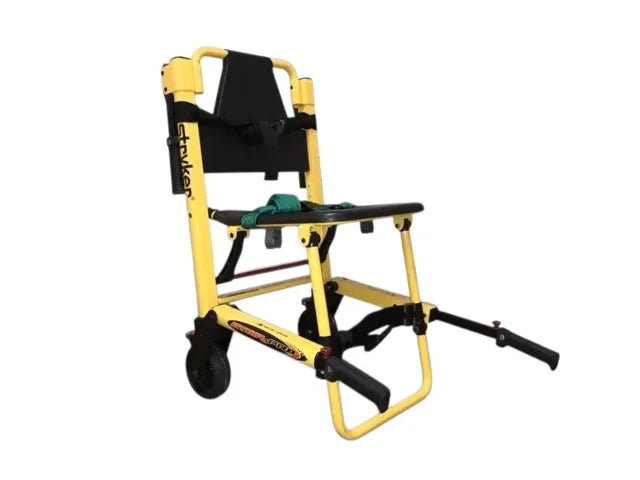
A stair chair moves a seated patient down stairs and through tight spaces where a cot will not fit: narrow hallways, apartment stairwells, basements and older buildings without elevators. The right chair depends on the buildings you respond to, the patients you carry and how your crews prefer to work. This guide covers the three types, the models you will see most, and what to check before you order.
Shop Manual Stair ChairsShop Powered Stair Chairs
Standard Chairs
A standard stair chair is a folding seat with handles front and back. Two crew members carry it down the stairs with the patient seated. They are the lightest and least expensive, fold flat for storage, and are a sensible choice as a backup or for services with mostly short, straight stairways. The trade-off is that the crew is lifting the patient's full weight on every step.
Tracked Chairs
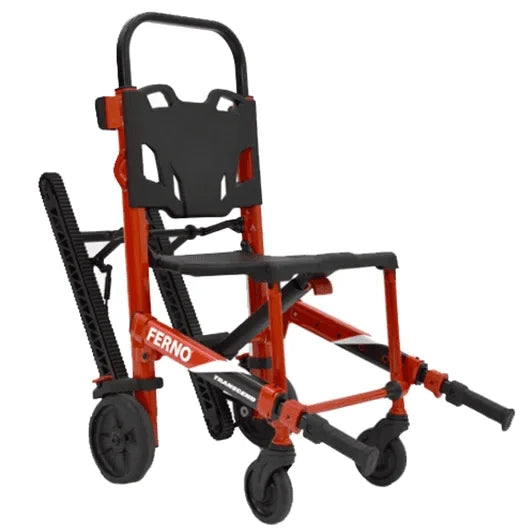
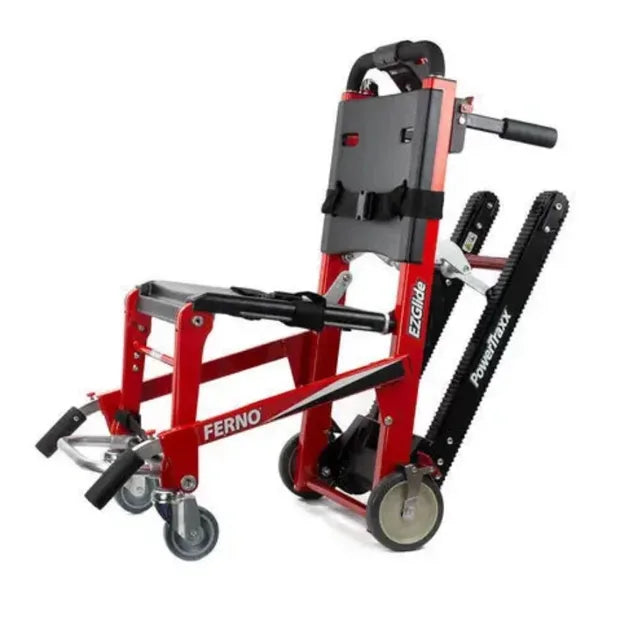
Tracked chairs, such as the Stryker Stair-PRO 6252 and the Ferno EZ Glide, have a belt track that rides down the stair edges. The crew guides and brakes the chair instead of carrying it, so the patient's weight goes into the stairs, not the crew's backs. They are the most common choice for EMS, and most are rated to 500 lb. Tracks are a wear item: they are made to be scuffed against stair edges and are replaced on a schedule.
Powered Tracks
Powered models, such as the Stryker Xpedition and Ferno chairs fitted with POWERtraxx, drive the track with a battery motor and can climb as well as descend. They cost more, weigh more and need charging, but they take almost all of the work out of long stairwells and heavy patients, and they let a single crew member control the descent. For services with many multi-story buildings and no elevators, they are often justified.
What to Check
- Weight capacity. Most chairs we carry are rated to 500 lb; check the rating against the patients you transport.
- Accessories. Extended foot rests, oxygen bottle holders, IV poles, head supports and extra restraint straps are all options; decide which you need before you order so the chair arrives ready.
- Storage. Measure where the chair will be stored in the rig. Tracked and powered chairs are bulkier when folded than a standard chair.
- Crew training. Tracked chairs require some practice to brake smoothly; powered chairs require more. Plan a training session when the chair arrives.
- Batteries on powered models. Like a powered cot, a powered stair chair needs a charging routine and a spare battery.
New or Recertified
We sell stair chairs new and recertified. A recertified chair has been inspected, repaired with replacement parts where needed (tracks, straps and grips are the usual items), cleaned and function-tested before it ships, and includes our 1 year warranty. Stair chair tracks are a wear item and are not covered by the warranty.
If you are unsure which chair fits your district, call 800-282-9352 and describe the buildings you respond to most often.