Buy Electric Patient Lifts: MedaCure Free Spirit Line
5 products
Showing 1 - 5 of 5 products
If your facility does more than a handful of transfers a day, buy an electric patient lift and skip the manual crank models entirely. The math is simple. A powered lift saves the caregiver's back on every single transfer, and over a year that adds up to fewer strains, fewer injury reports, and staff who don't dread the heavy lifts. Every model on this page runs on a battery, so there's no pump handle and no hydraulic arc to work through by hand.
Battery-Powered Lifts vs Manual: Which Belongs in Your Facility
We carry manual options too, including a hydraulic FS450-H and a manual sit-to-stand FS400-STS. Those have their place in low-volume settings or as a backup. But if you're transferring the same residents multiple times a shift, an electric patient lift pays for itself in reduced caregiver fatigue.
A manual crank slows everything down and asks a lot of the operator on the tenth lift of the day. A motor doesn't get tired.
The MedaCure Free Spirit Electric Patient Lift Range
Every electric model we stock comes from MedaCure's Free Spirit line, and the range is built around body size and transfer type. Here's how it breaks down:
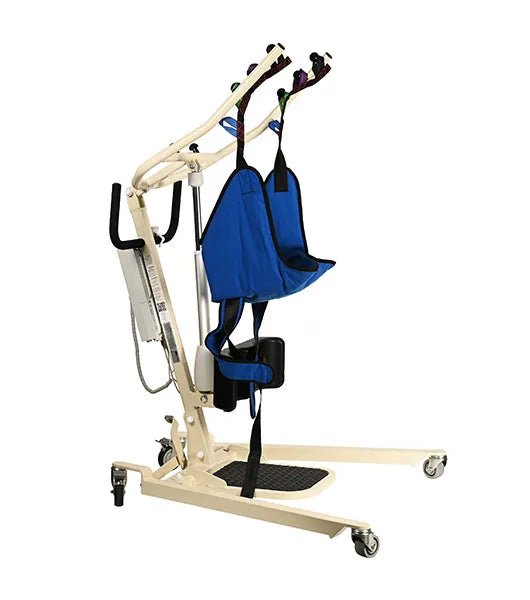
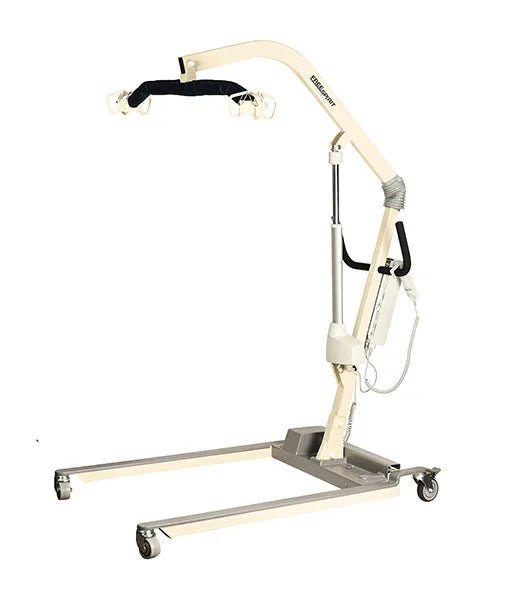
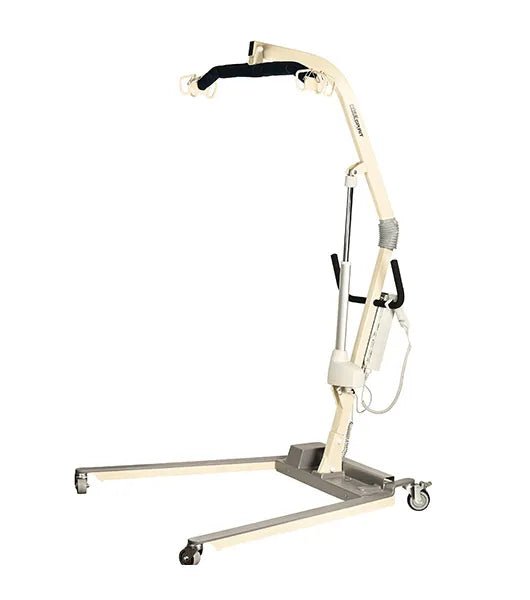
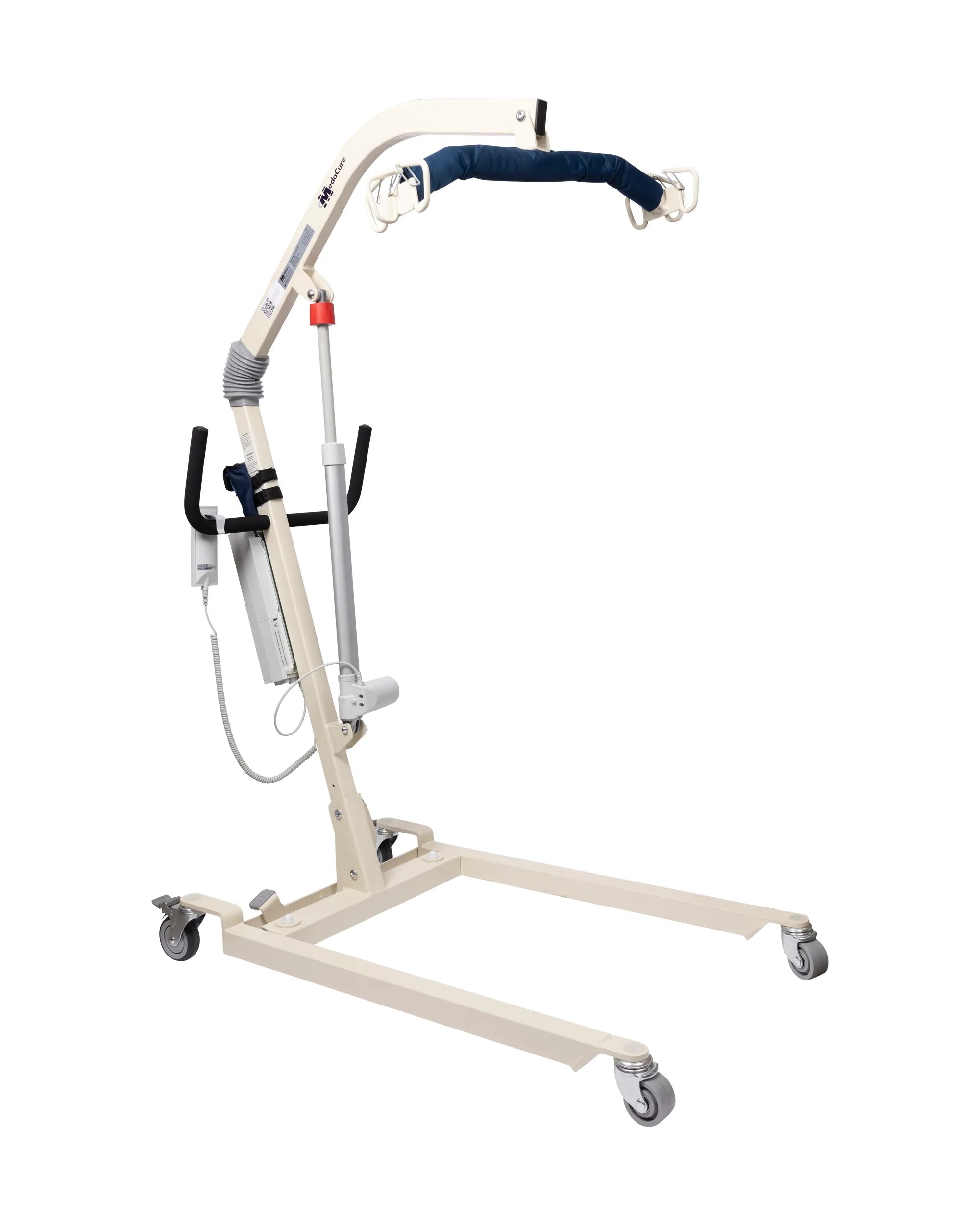
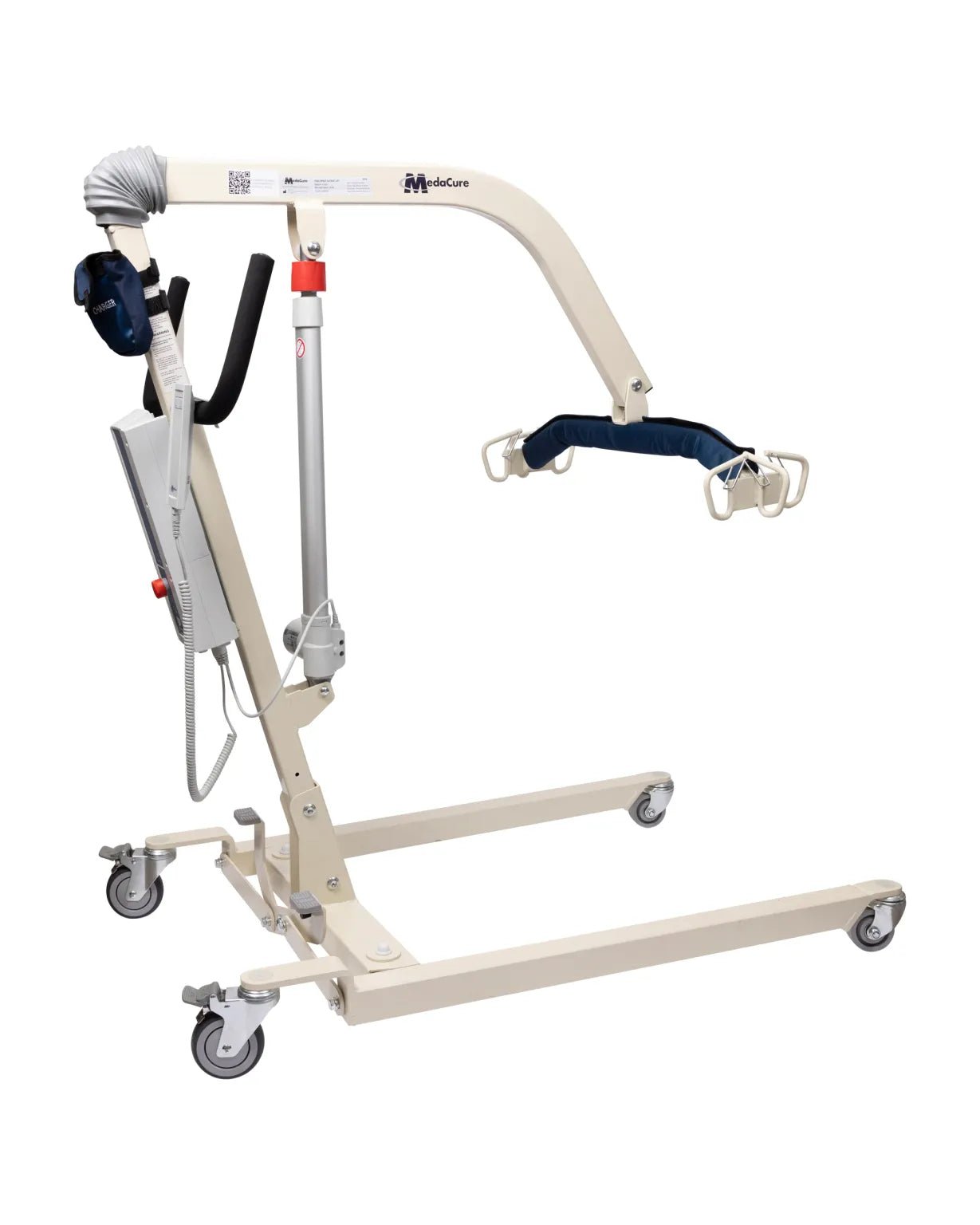
- FS450-L Battery Powered Patient Lift is the standard full-body floor lift for typical adult transfers.
- FS660-L Bariatric Battery Powered Patient Lift steps up for heavier patients who need more frame and more capacity.
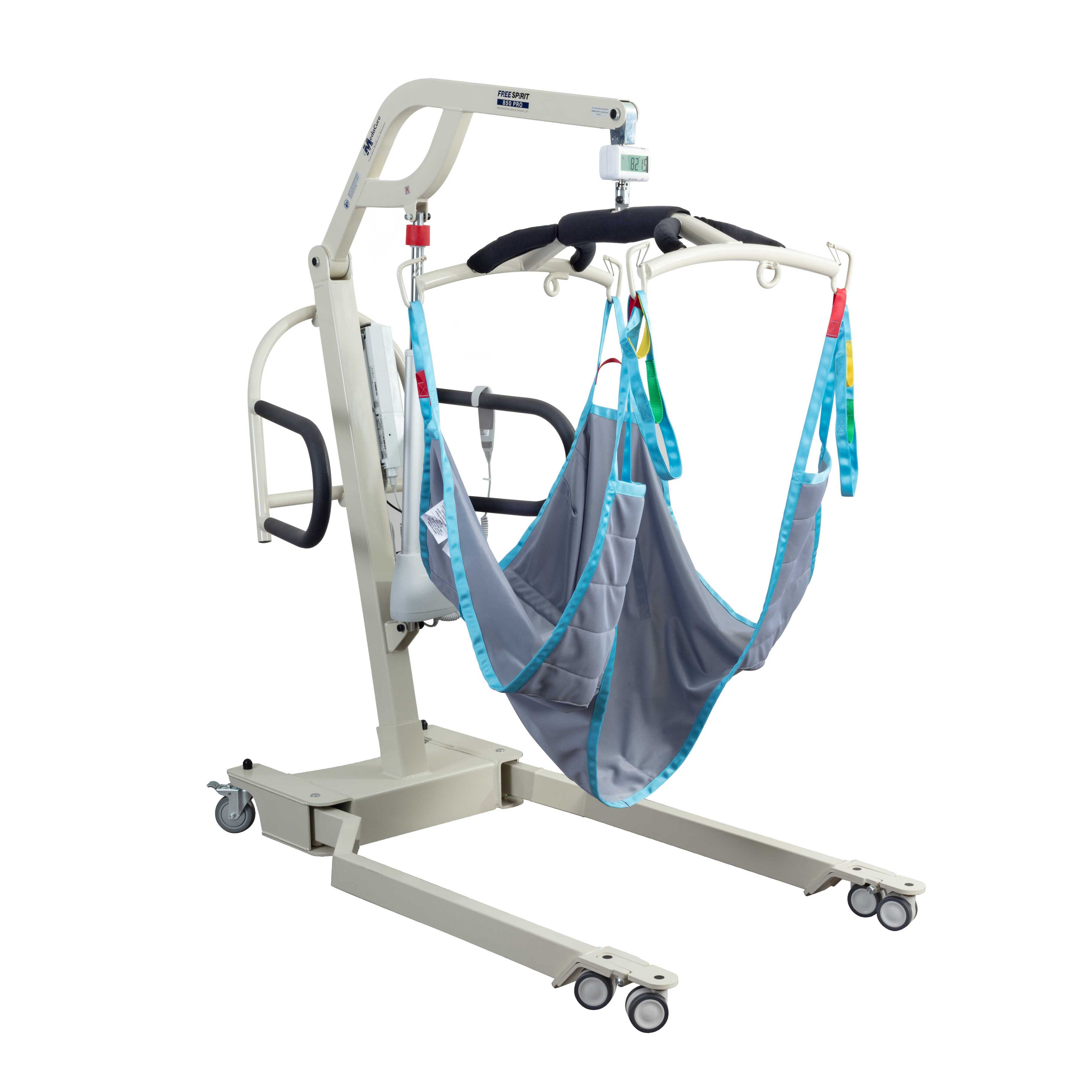
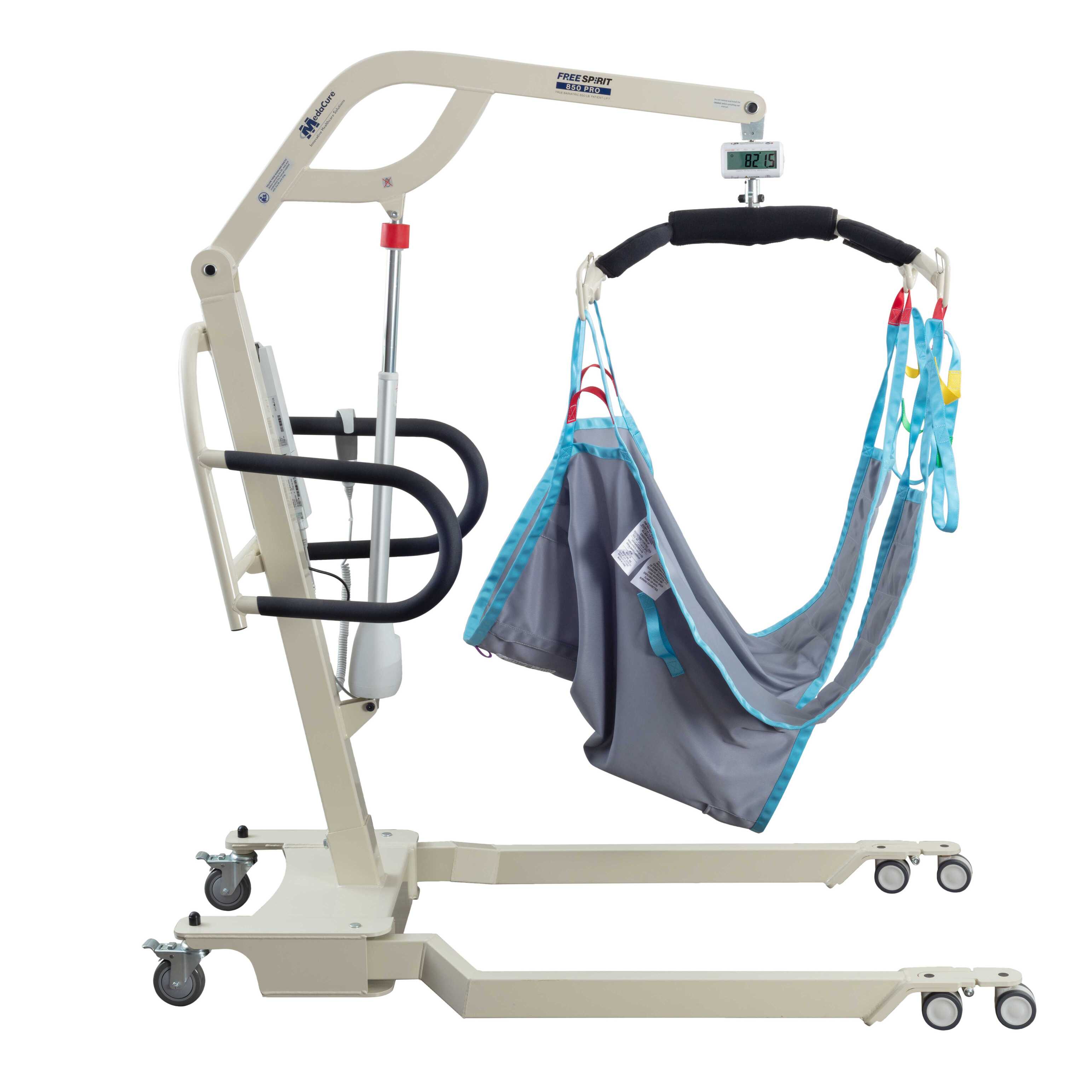
- FS850 Pro True Bariatric Patient Lift is rated to 850 lbs, the top of the line for the heaviest transfers.
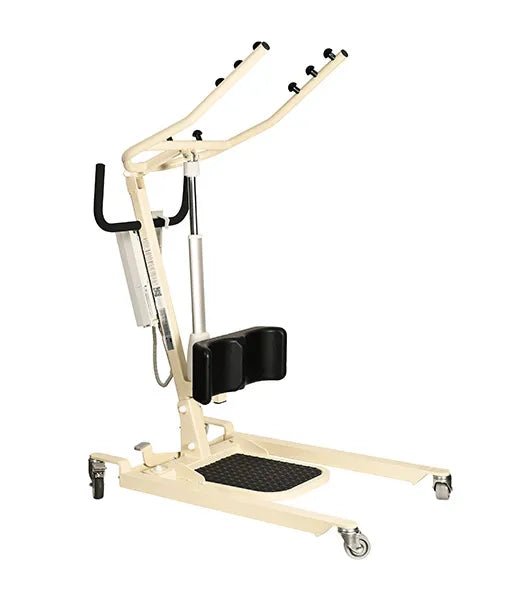
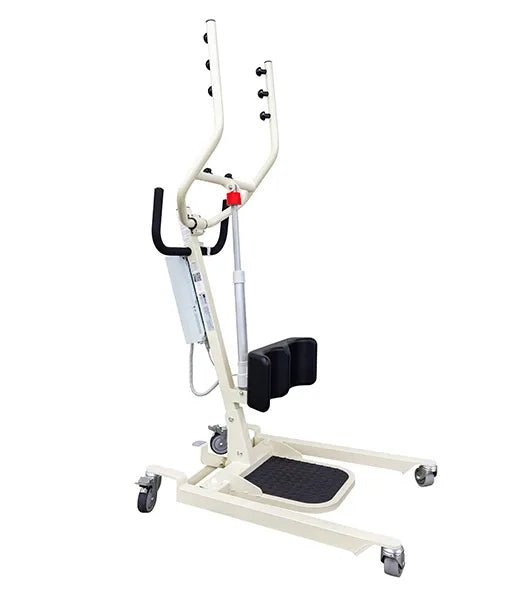
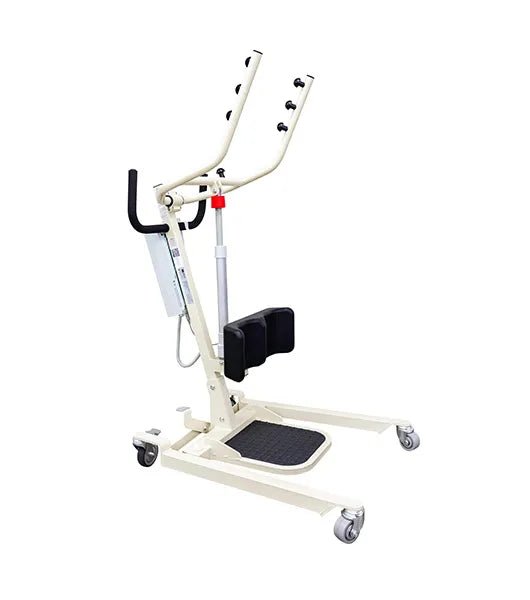
- FS450-STS-L Powered Sit-to-Stand Patient Lift helps partially weight-bearing patients get from sitting to standing.
- FS600STS-L Bariatric Sit-to-Stand Patient Lift does the same job for larger patients.
The split you'll care about most is full-body versus sit-to-stand. A full-body lift handles patients who can't bear any weight. Sit-to-stand assumes the patient can push through the legs a little and just needs help completing the motion.
Who's Buying an Electric Patient Lift
Long-term care and skilled nursing facilities are the biggest buyers here, and they tend to go for a fleet of full-body units plus a couple of sit-to-stand lifts for rehab-track residents. Volume drives that decision.
Home-care families are the other half. When someone's caring for a parent or spouse at home, a single powered lift changes the whole routine, and often keeps that person out of a facility longer. For a solo caregiver, the electric option isn't a luxury.
Rehab clinics and assisted-living operations round out the mix. They usually want at least one sit-to-stand model because so much of their work is about getting patients moving again.
What to Look For in an Electric Patient Lift
Weight capacity first. Pick the model that clears your heaviest expected patient with margin to spare, because loading a lift right to its limit is asking for trouble. If you handle bariatric transfers at all, size up to the FS660-L, FS850 Pro, or the bariatric sit-to-stand.
Next, match the lift type to your patients. Non-weight-bearing means full-body. Partial weight-bearing means sit-to-stand.
Slings matter as much as the lift itself. A lift is only as good as the sling on it, so plan to buy the right style and size for your patients rather than assuming one sling covers everyone. Pair your order with a look through our patient lift slings if you're outfitting a room from scratch.
Think about maneuverability too. Caster quality and base width decide how easily the lift rolls under a bed or into a bathroom under load. A unit that fights you in tight spaces gets left in the hallway, and a lift that doesn't get used protects nobody.
Full-Body vs Sit-to-Stand: My Honest Take
If you can only buy one electric patient lift to start, get the full-body model. It covers the widest range of patients, including the ones who can't help at all, and those are the transfers where injuries happen. A sit-to-stand can't do a non-weight-bearing lift, so it leaves your hardest cases uncovered.
Once you've got a full-body lift in place, add a sit-to-stand for the residents working toward more independence. That combination handles almost anything a floor throws at it. Buy them in the wrong order and you'll be renting or borrowing for the patients your lone sit-to-stand can't safely move.
Ready to match a Free Spirit model to your floor? Scroll the full electric lineup below and size by capacity first.
Electric Patient Lift FAQ
Q: Do I need a battery-powered lift or will a manual one work?
A: A manual hydraulic lift works fine for occasional, low-volume transfers or as a backup. If your staff runs multiple transfers per shift, an electric patient lift reduces fatigue and injury risk enough to justify the cost. High-volume settings should go powered.
Q: What's the difference between the Free Spirit full-body and sit-to-stand models?
A: The full-body models (FS450-L, FS660-L, FS850 Pro) support patients who can't bear weight, using a sling that cradles the whole body. The sit-to-stand models (FS450-STS-L, FS600STS-L) are for patients who can push through their legs and just need help completing the stand. Match the lift to what your patient can physically do.
Q: Which electric patient lift is right for a home-care setting?
A: For most home-care situations with one caregiver, a single full-body powered lift like the FS450-L covers the widest range of daily transfers. If the person you're caring for can bear partial weight, a sit-to-stand model can make transfers quicker. Bariatric needs point you to the FS660-L or FS850 Pro.
Q: How do I choose the right weight capacity?
A: Pick a model that clears your heaviest expected patient with room to spare instead of buying right up to the limit. The FS850 Pro is the true bariatric option at 850 lbs. For standard adult transfers, the FS450-L handles typical needs, and the FS660-L bridges the gap when you regularly move larger patients.