

A drawer that sticks halfway, a top shelf that wobbles when someone sets a water pitcher down, a drawer that won't lock when personal items need securing. That's the difference a well-built bedside cabinet makes in a room where someone spends most of the day. We stock Medacure bedside cabinets made for exactly that environment, where furniture takes more handling than it ever would in a spare bedroom.
What a Bedside Cabinet Needs to Do in a Care Room
The job is simple on paper. Hold personal items within arm's reach, stay put beside the bed, and hold up to daily cleaning without the finish peeling.
In practice, that's a tall order for cheap furniture. A home nightstand isn't built for wipe-down disinfectants or the constant bumping that happens around a hospital bed. The surfaces on a care-grade bedside cabinet are meant to shrug that off. That's the gap worth paying for.
Types of Bedside Cabinet to Know Before You Order
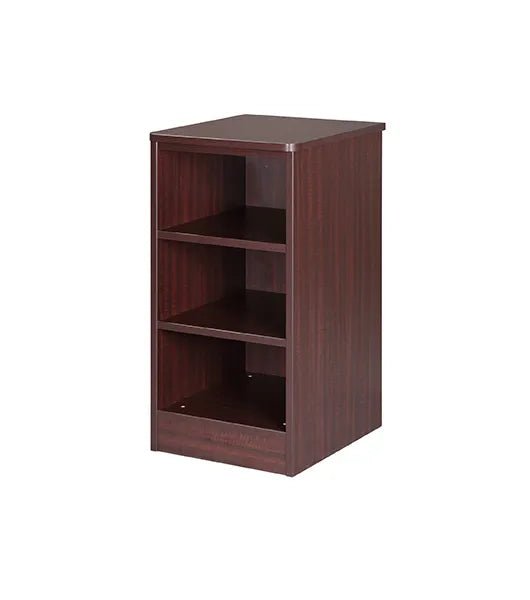
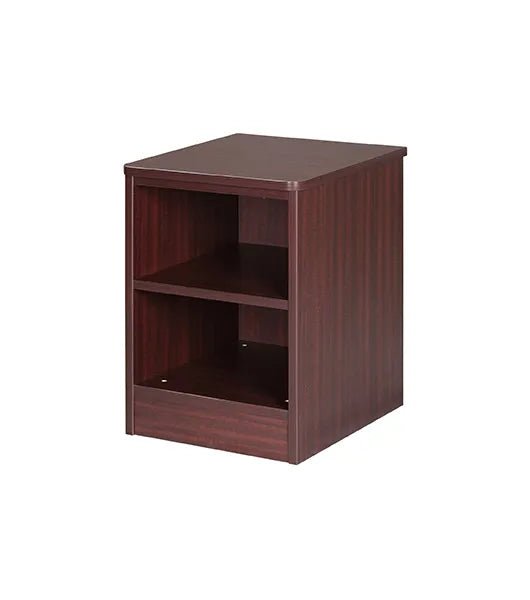
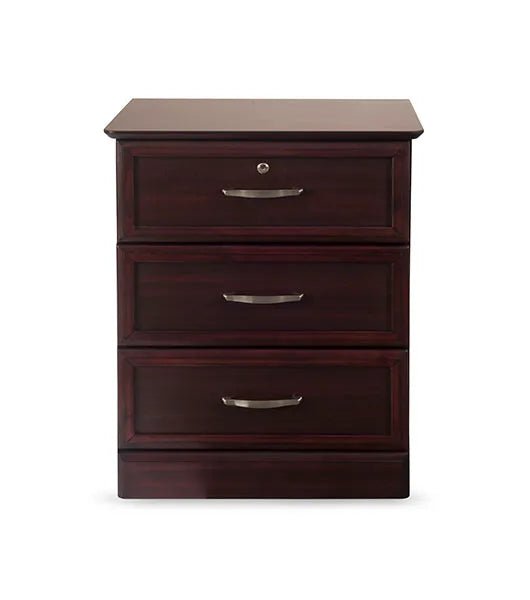
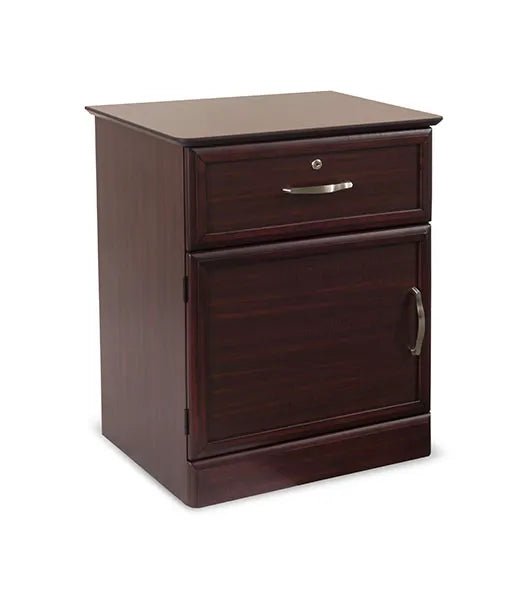
Most buyers are choosing between a few basic layouts. Our Medacure range includes one-drawer nightstands with a lower cabinet compartment, three-drawer bedside cabinets with a locking top drawer, and open-shelf behavioral health night stands in one- and two-shelf versions.
Locking storage matters more than people expect. A locking top drawer keeps personal belongings secure in a shared or resident room. Open-shelf units go the other way, keeping items visible to staff in behavioral health settings.
Finish is the other split. Medacure bedside cabinets come in finishes such as cherry, mahogany, maple and coastal grey. If you're furnishing a wing, pick one finish and stick with it so replacements down the road still match.
Who's Ordering Bedside Cabinets
Hospitals and rehab units buy these by the unit, so durability and easy cleaning drive the decision more than looks. A cabinet that needs replacing in two years costs more than the sturdy one did up front.
Assisted living and memory care homes lean toward something that reads a little more residential while still handling institutional cleaning. Rounded edges and stable bases are worth checking for in those settings.
Then there's home care. A family setting up a bedroom for a recovering parent often wants the same features a facility does, just one at a time. Pair the cabinet with an Overbed Table and a set of Bed Rails and Assist Bars and you've covered most of what makes a bed safer to live around.
How to Choose a Bedside Cabinet That Lasts
Start with the top surface, because that's where everything lands. You want a top that can take repeated disinfecting without clouding or lifting at the edges.
Check the drawer action next. Smooth-glide drawers aren't a luxury here. A drawer that jams is a drawer a weak-gripped patient can't open, and that defeats the whole point of keeping items close.
Look at the footprint and height too. If the cabinet sits beside a bed, it needs to clear the bed frame and any rails. Measure before you buy. It's a small step people skip until the cabinet shows up and won't tuck in.
While you're setting up the room, a Shower Chair or Transfer Bench and a Recliner or Geri Chair round out the care space nicely.
Drawer Cabinet vs Open-Shelf Night Stand: My Take
Here's the honest answer most catalogs won't give you. If the resident keeps personal belongings in the room, go with a drawer cabinet that has a locking top drawer. Security and tidy storage pay off every shift.
If the setting is behavioral health, where staff need to see what's stored, the open-shelf night stand is the purpose-built choice. Everything stays visible and there's nothing to hide behind a drawer front.
For most care settings I'd steer buyers toward the locking drawer cabinet. For residential-style rooms, the one-drawer nightstand with a lower compartment does the job in less space.
Browse the Medacure bedside cabinets below and see which layout fits the rooms you're furnishing.
Bedside Cabinet FAQ
Q: What's the difference between a hospital bedside cabinet and a regular nightstand?
A: A care-grade bedside cabinet is designed for resident rooms and healthcare environments, with surfaces and storage built for repeated cleaning and daily handling around a hospital bed. A standard nightstand isn't built for that kind of use.
Q: Do bedside cabinets have locking drawers?
A: Several Medacure bedside cabinets and nightstands include a locking top drawer. Check the product details for the layout and locking features that match your room.
Q: Is a bedside cabinet right for home care, or just facilities?
A: It works well for both. Families setting up a recovery room often want the same durability and reach-from-bed convenience a facility uses. The Medacure line suits home bedrooms and institutional settings alike.
Q: What should I look for to tell a quality bedside cabinet from a cheap one?
A: Focus on the top surface, drawer action, and base. A top that stands up to disinfecting, smooth-gliding drawers a patient can open easily, and a stable base separate a cabinet that lasts years from one you'll replace fast.


Shop by Collection
- Stryker Stretchers
- Ambulance Stretchers
- Ferno Stretchers
- Used Ferno Stretchers
- Stryker Power-PRO XT
- Stryker Power-PRO 2
- Stryker MX-PRO
- Stryker Electric Stretchers
- Stryker Stair Chairs
- Ferno Stair Chairs
- Stryker Powered Stair Chairs
- Stryker Accessories
- Stryker Stretcher Parts
- Stryker Parts Online
- Stryker Fasteners
- Ferno Accessories
- Ferno Stair Chair Parts
- Stretcher Straps
- Stryker Stretcher Mattresses
- Wheelchair Lift Parts
- Braun Wheelchair Lift Parts
- LIFEPAK 15
- LUCAS Chest Compression
- Medical Devices
- Spine Boards
- Scoop Stretchers
- Transfer Boards
- ZOLL
- Patient Transport Equipment
- Stryker
- Ferno