
A patient lift moves a person between bed, chair, wheelchair and toilet without the caregiver doing the lifting. For a nursing home, assisted living facility or a family caring for someone at home, it protects the caregiver's back and makes transfers safer and more dignified for the patient. The choice depends on two factors: what the patient can do, and what the caregiver has to manage.
Full-Body Lifts
Full-body (or floor) lifts are for patients who cannot bear weight. The patient is lifted in a sling that supports the whole body, and the lift rolls them to the destination. There are two kinds:
- Hydraulic (manual) lifts are pumped by hand. They are less expensive, need no charging and are simple to maintain. A good fit for occasional transfers or a budget-conscious home setup.
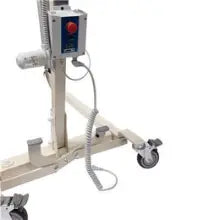
- Battery-powered lifts raise and lower with a button on a hand control. They are easier on the caregiver, faster, and the better choice when transfers happen many times a day.
Check the base width and whether the legs spread, because the lift has to roll under the bed or around a chair. Check the weight rating; standard lifts are commonly rated around 400 to 450 lb, and bariatric models go to 600 lb and beyond.
Sit-to-Stand Lifts
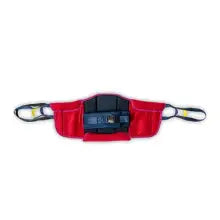
Sit-to-stand lifts are for patients who can bear some weight and hold on. The patient sits, a sling goes around their back and under their arms, and the lift raises them to standing. They are mostly used for toileting, dressing and short transfers from bed to chair, and they help keep the patient active. They are not for someone who cannot support themselves at all.
Choosing a Sling
The sling is as important as the lift and is the component most often ordered incorrectly.
- Match the sling type to the lift and the task. Full-body slings for floor lifts; sit-to-stand slings for standing lifts; toileting slings with an open bottom; divided-leg slings for easier placement; mesh slings for bathing.
- Size it to the patient. Most manufacturers publish a sizing chart by height and weight. A sling that is too large lets the patient slip; one that is too small is uncomfortable and unsafe.
- Check the weight rating of both the lift and the sling. The lower of the two is the limit.
- Plan for more than one. Slings are washed often; two per patient keeps one in service while the other is being laundered.
Recommended Accessories
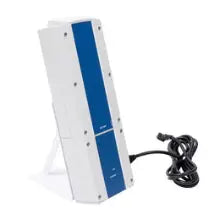
A digital scale that fits between the lift and the sling lets staff weigh patients during a transfer. A spare battery and an external charger keep a powered lift in service when the first battery is charging.
New or Recertified
We sell lifts and slings new; many lifts are also available recertified, inspected and function-tested before they ship, with our 1 year warranty included. Slings are sold new.
For help matching a lift and sling to a patient, call 800-282-9352 and provide the patient's weight, mobility level, and where the transfers take place.