Shop the Full Body Patient Lift Sling for Safe Transfers
6 products
Showing 1 - 6 of 6 products
A caregiver moving a non-weight-bearing patient from bed to wheelchair needs one thing to go right, and a full body patient lift sling is what makes that transfer safe instead of a gamble. Picture the aide at 6 a.m., alone in the room, trying to reposition someone who can't help at all. That's the moment this product exists for. The right sling cradles the whole body, spreads the load, and takes the strain off both the patient and the person doing the lifting.
What a Full Body Patient Lift Sling Is Actually For
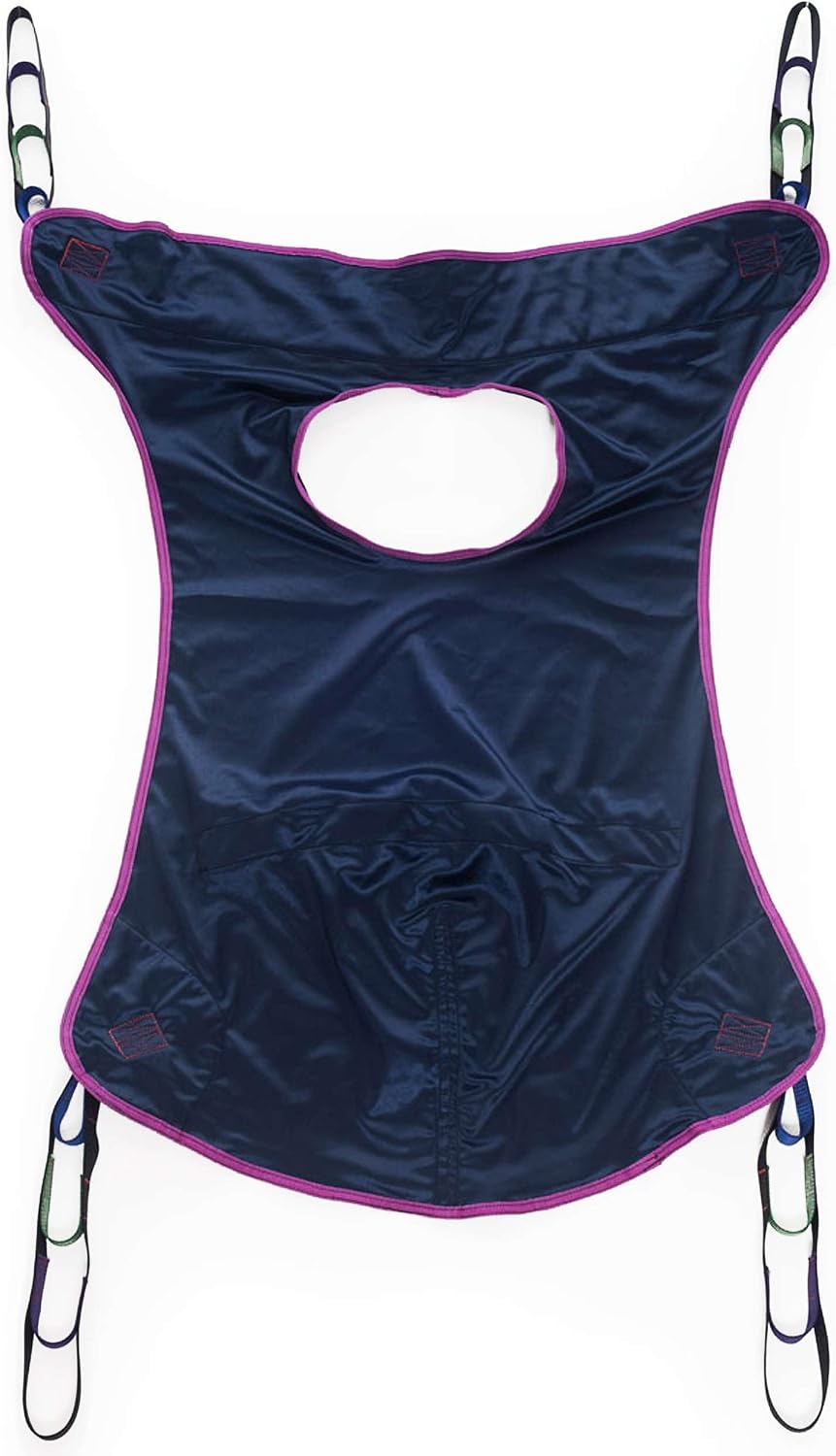
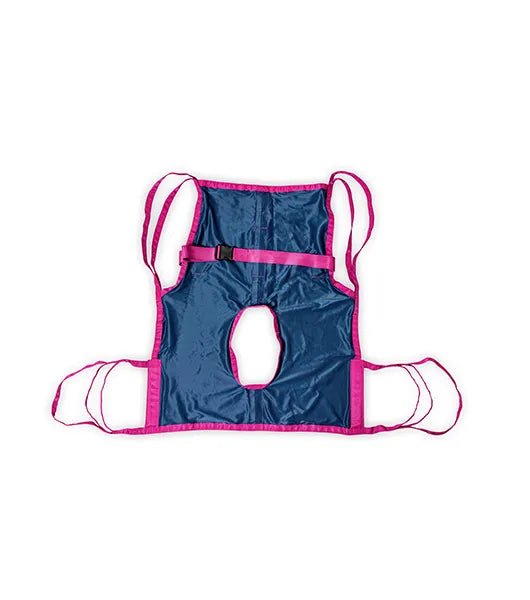
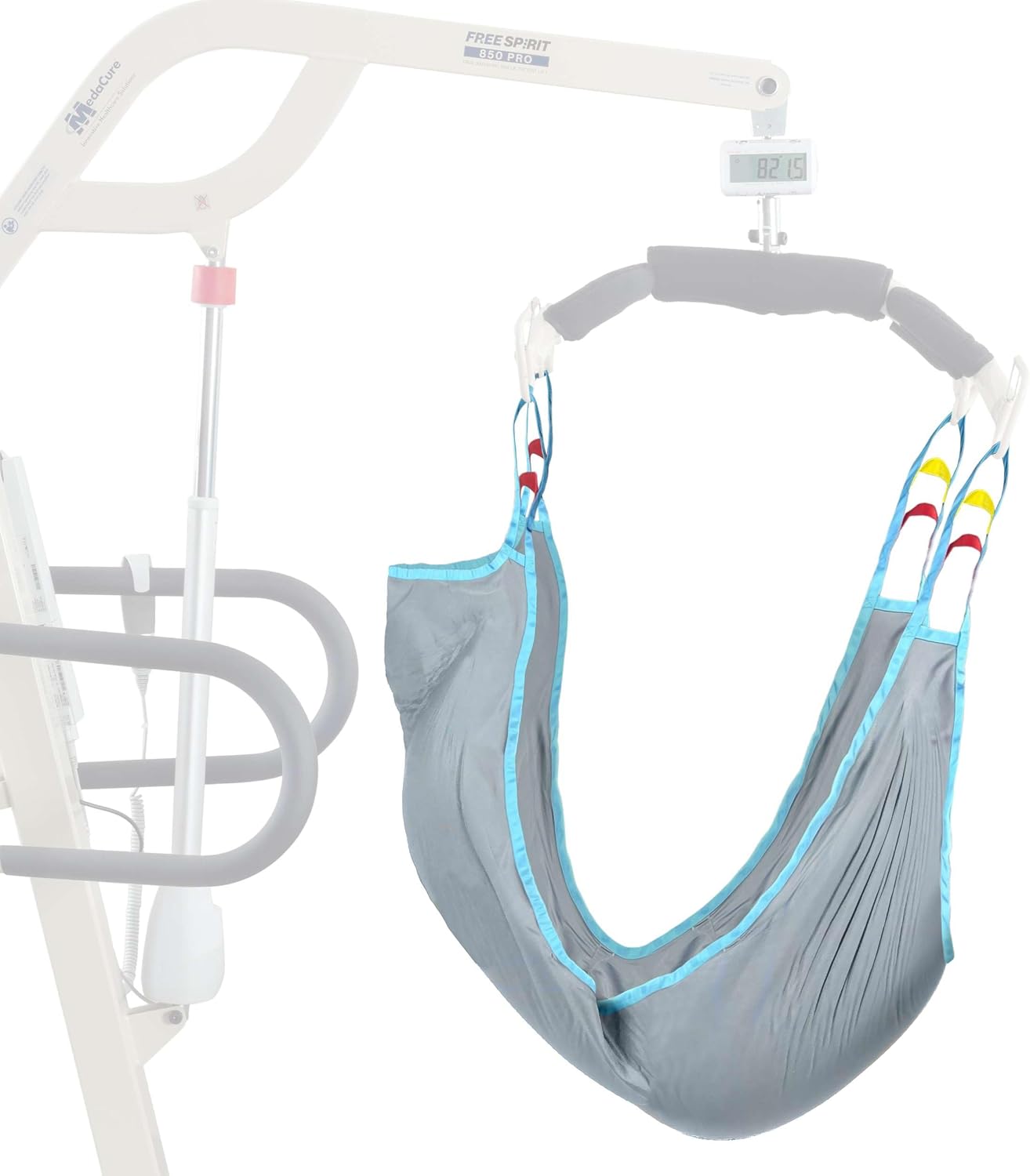
This isn't a strap or a transfer belt. A full body patient lift sling supports the head, back, and legs together, which is the whole reason it works for patients who have little or no trunk control. You pair it with a floor lift or a ceiling track, clip the loops, and let the mechanical lift do the work.
Most of the demand comes down to two problems: patient dignity and caregiver back injuries. Manual lifting is where staff get hurt. A sling that fits the patient and the lift correctly is how facilities cut down on both.
Solid or Mesh, and How to Size It
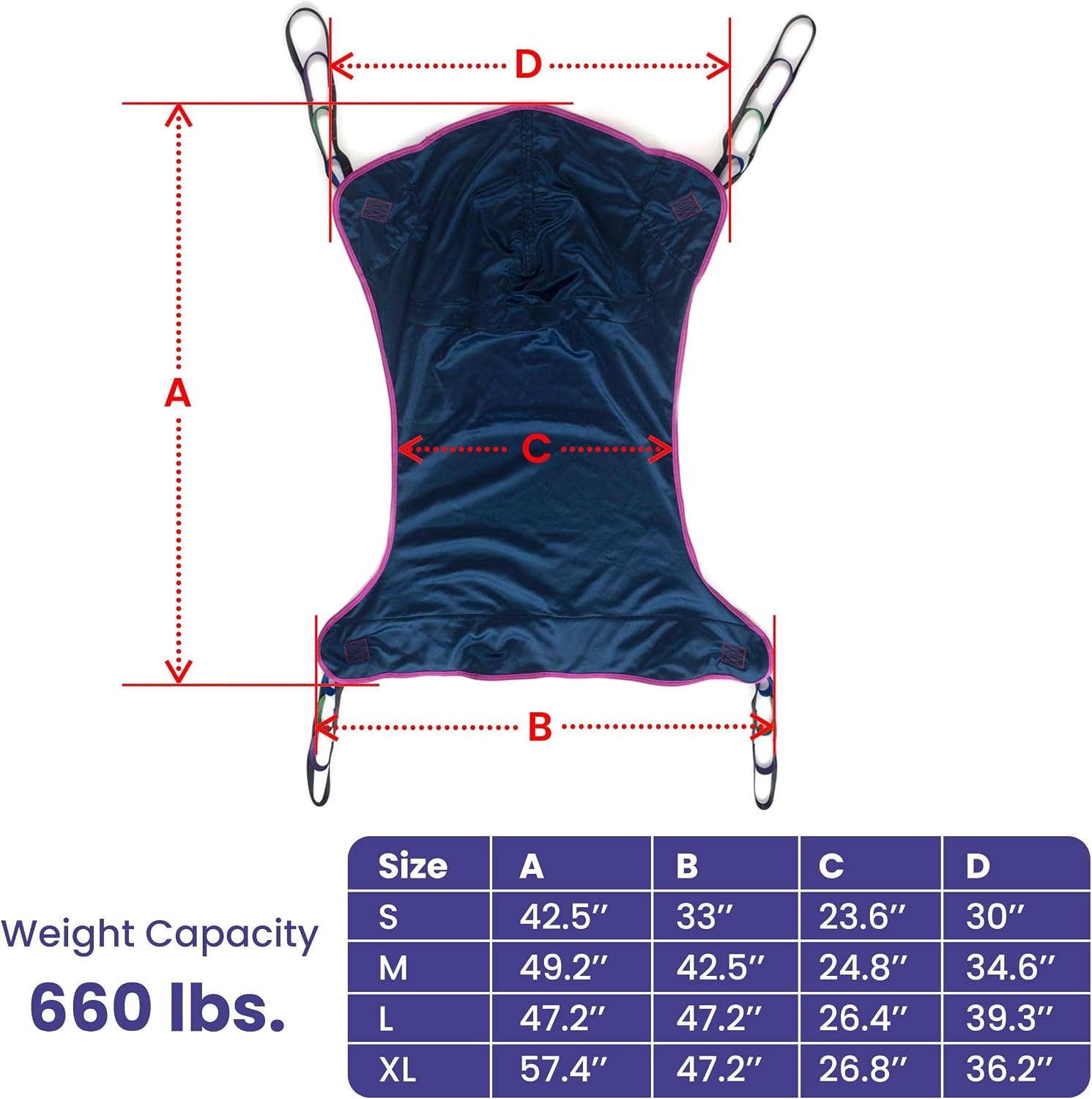
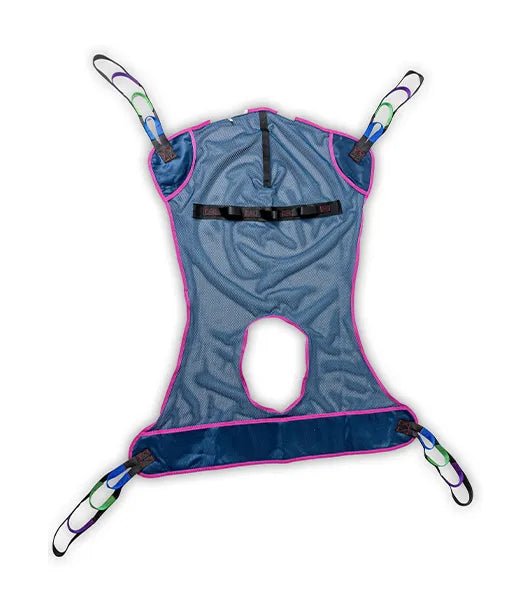
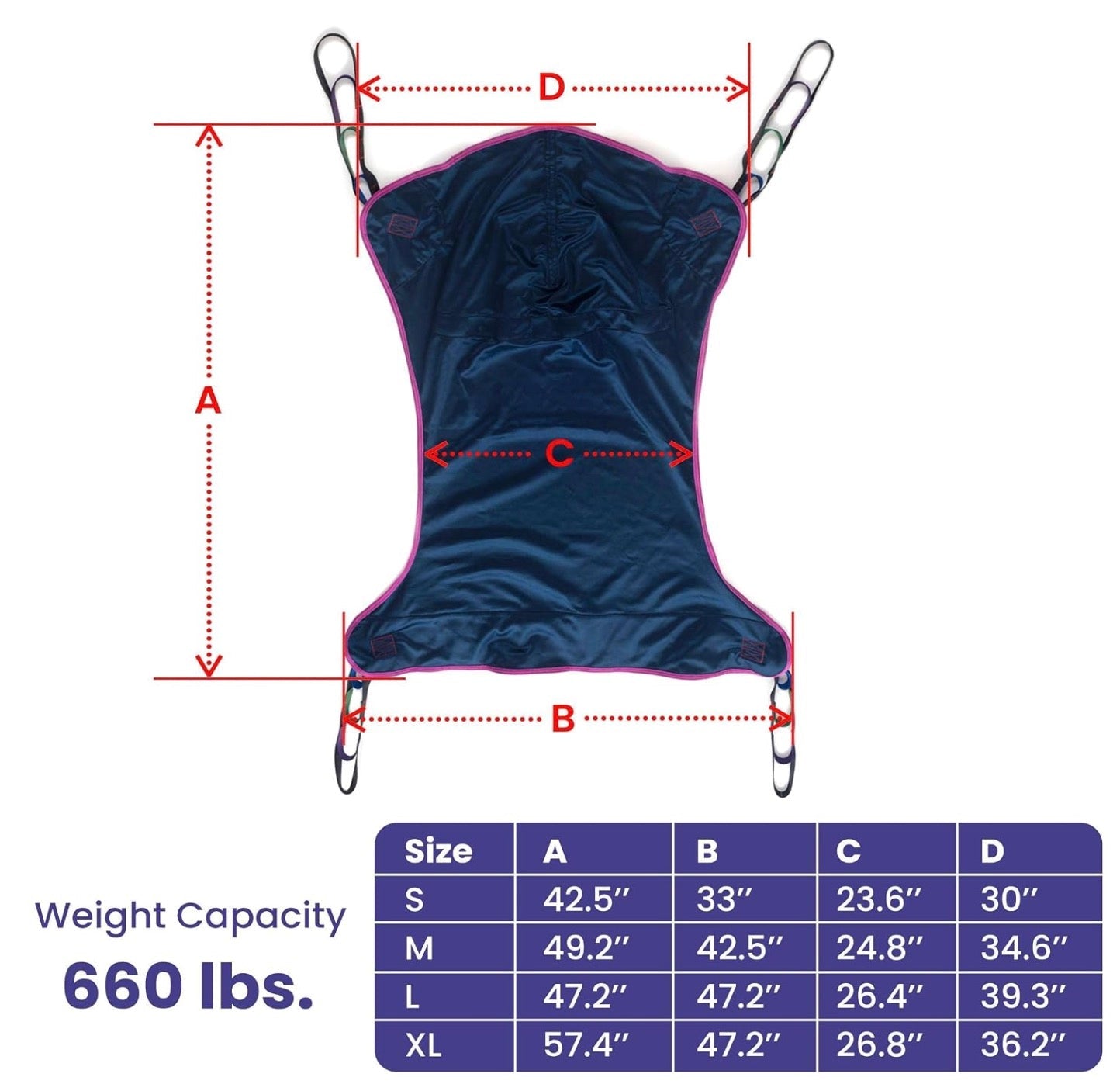
The core builds in this collection are a standard solid-fabric full body sling and a mesh version, each also available with a commode opening, plus an 850 lb bariatric full body sling. Solid fabric is the everyday choice for bed-to-chair moves. Mesh promotes airflow and comfort during extended use.
Sizing is where people slip up. A sling that's too big lets the patient slide, and one that's too small won't seat right. Our full body slings run S100, M200, L300, XL400 and XXL500, with the mesh version available in M200-M, L300-M and XL400-M. Match the size to the patient before you match anything to the lift.
One more thing most people overlook: loop-and-clip attachment styles aren't universal across every lift brand. Check that the sling connection works with the lift you already own.
Who Buys Full Body Patient Lift Slings
Nursing homes and long-term care facilities are the biggest users, since they're moving the same dependent residents multiple times a day. Rehab centers and hospitals stock them for patients who can't bear weight after surgery or injury.
Home care is the other half of the market. Families caring for an aging parent or a bariatric patient often need a full body patient lift sling for a home lift, and they care about comfort and easy cleaning as much as anything. Bariatric patients need heavier-rated slings sized for their frame, which is a separate purchase and not just a bigger version of the standard one.
What to Look For When Choosing a Sling
Start with the patient, not the catalog. Weight capacity has to clear the patient with margin to spare. Head support matters if trunk control is poor. And the fabric decides how it's used.
Compatibility with your lift is non-negotiable. Confirm the attachment type before you buy. Fabric durability matters too, since slings get washed constantly and cheap material breaks down fast.
If you're building out a full transfer setup, it's worth browsing the patient lifts alongside the slings so the lift and sling are matched from the start. If you need a different style, whether divided leg, sit-to-stand, toileting or commode access, the wider patient lift sling range covers those.
Full Body Sling vs Sit-to-Stand Sling: Which One
Here's the plain version. A sit-to-stand sling is for patients who can bear some weight and follow instructions, it wraps under the arms and around the back. A full body patient lift sling is for patients who can't help at all.
Don't buy a sit-to-stand for a fully dependent patient. It won't support them and it isn't safe. If the patient can't stand and can't assist, the full body sling is the correct answer every time. When in doubt, go full body, since it covers the harder cases and a sit-to-stand can't.
Ready to match a sling to your lift? The sizes are below.
Full Body Patient Lift Sling FAQ
Q: What is a full body patient lift sling used for? A: It's used to safely transfer patients who can't bear weight or control their own body, like moving someone from bed to wheelchair. It supports the head, torso, and legs together and works with a floor or ceiling lift. Caregivers rely on it to prevent both patient falls and their own lifting injuries.
Q: What's the difference between the solid and mesh full body slings? A: Solid fabric is the general-purpose choice for routine bed-to-chair transfers. Mesh promotes airflow and comfort during extended use.
Q: What sizes do these slings come in? A: The solid full body sling runs S100, M200, L300, XL400 and XXL500. The mesh version is available in M200-M, L300-M and XL400-M. Size to the patient rather than rounding up, since an oversized sling lets the patient shift during the lift.
Q: How do I know which sling works with my lift? A: Check the attachment style, since loop systems and clip systems aren't always interchangeable between lift brands. Confirm your lift's connection type and weight rating before ordering, then match the sling size and fabric to the patient. If you're not sure, pairing the sling and lift from the same setup avoids compatibility problems.