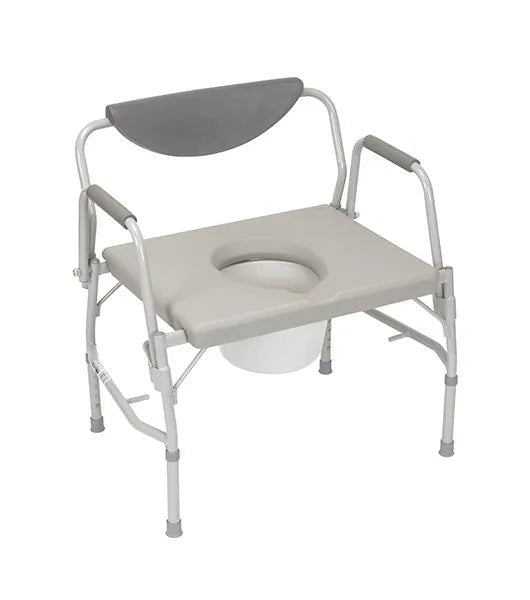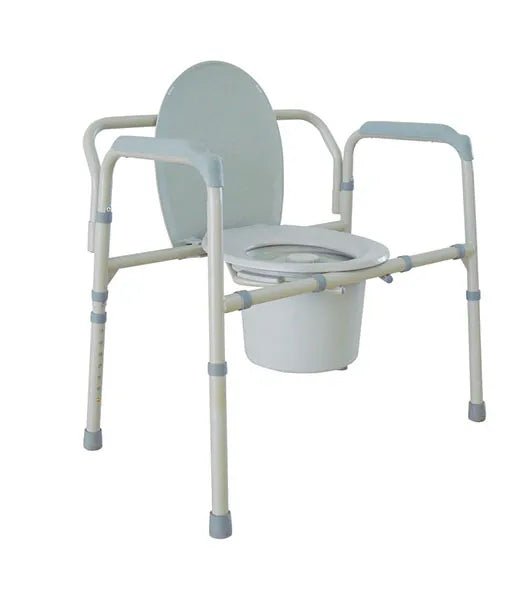
Shop Bariatric Commode Chairs for Higher Weight Capacities
2 products
Showing 1 - 2 of 2 products
Moving a larger patient safely to and from a bedside commode? A bariatric commode solves the problem most narrow, low-rated commodes create the moment someone heavier sits down. These are wider, sturdier seating units rated for higher weight limits, and they're one of those items facilities tend to buy reactively, after a close call, instead of ahead of time.
What Makes a Bariatric Commode Different
Width and frame strength. That's the short version.
A standard bedside commode is fine until the person using it exceeds what the frame was designed to hold. A bariatric commode is engineered around a broader seat, a heavier-gauge frame, and reinforced leg assemblies so the whole thing stays stable under load. The seat opening is usually larger too, which matters for comfort and dignity more than most product listings admit.
Stability is the real reason these exist. When a patient goes to sit or stand, the frame takes a lot of lateral stress. A unit that flexes or tips isn't just uncomfortable, it's a fall risk for the patient and an injury risk for whoever's assisting.
Choosing a Capacity Tier
The decision that matters most here is rated capacity, and we stock two tiers from MedaCure: the CB650 at a 650 lb capacity and the CB1000 at 1000 lb.
Pick the rating with real headroom above the patient's actual weight. Dynamic force during a transfer is higher than a static number suggests, so a patient near the top of a 650 lb rating is better served by the 1000 lb frame. Buying up a tier costs less than replacing a frame that has started to flex.
Who's Buying Bariatric Commode Chairs
Care facilities and nursing homes buy the most of them, usually to standardize their fleet so staff aren't scrambling when a heavier resident is admitted. Home care buyers are the other big group, often a family member ordering for a parent or spouse who's outgrown a standard commode.
Hospitals and rehab units keep a few on hand for the same reason. Occupational and physical therapists sometimes specify a particular seat height or arm style for a client, so if you're a clinician, order to the spec you actually need instead of the closest thing in stock.
What to Look For When Choosing One
Weight capacity is the first spec to confirm, and don't cut it close, for the reasons above.
Seat width and the shape of the opening come next. A frame rated high but built narrow defeats the purpose. Check adjustability too, since a commode that sits at the wrong height forces a harder, riskier transfer.
Think about how the patient will actually get onto the unit. If transfers involve staff assistance or a slide board, clearance around the seat is what protects the caregiver's back and the patient's skin. Pair the commode with the rest of your safe-handling setup, whether that's patient lifts and patient lift slings or a hospital bed for the room. Skip the bargain-tier frames if the unit will see daily use. They wear out and get wobbly fast.
CB650 vs CB1000: Which One to Get
If your heaviest expected user sits comfortably under 650 lb with margin, the CB650 is the sensible buy and it takes up less room.
If you are a facility rather than a single household, my honest take is to default to the CB1000. Facilities don't get to choose who gets admitted next, and the larger frame means you are never the ones scrambling to source a commode at short notice. For a home-care buyer with one known user, match the tier to that person and save the difference.
Bariatric Commode FAQ
Q: What weight can a bariatric commode hold?
A: We stock two tiers: a 650 lb capacity model and a 1000 lb capacity model. Always confirm the rating on the specific unit before you buy, and choose one rated well above the patient's weight to account for the added force during sitting and standing.
Q: What's the difference between the CB650 and the CB1000?
A: Capacity and frame build. The CB650 is rated to 650 lb and suits most single-user home-care situations. The CB1000 is rated to 1000 lb with a correspondingly heavier frame, which is the safer default for facilities that can't predict their next admission.
Q: Is a bariatric commode right for home care?
A: Yes, home care is one of the most common uses. Families ordering for a heavier loved one should focus on seat width, height adjustability, and how much clearance a caregiver needs, since most home transfers happen without professional assistance.
Q: How do I keep a bariatric commode stable and safe?
A: Confirm the rated capacity clears the user with margin, set the height so the user's feet rest flat, and check that all leg assemblies are fully seated and locked before each use. Inspect the frame periodically for flex or play at the joints, since that is the first sign a high-use unit is wearing.