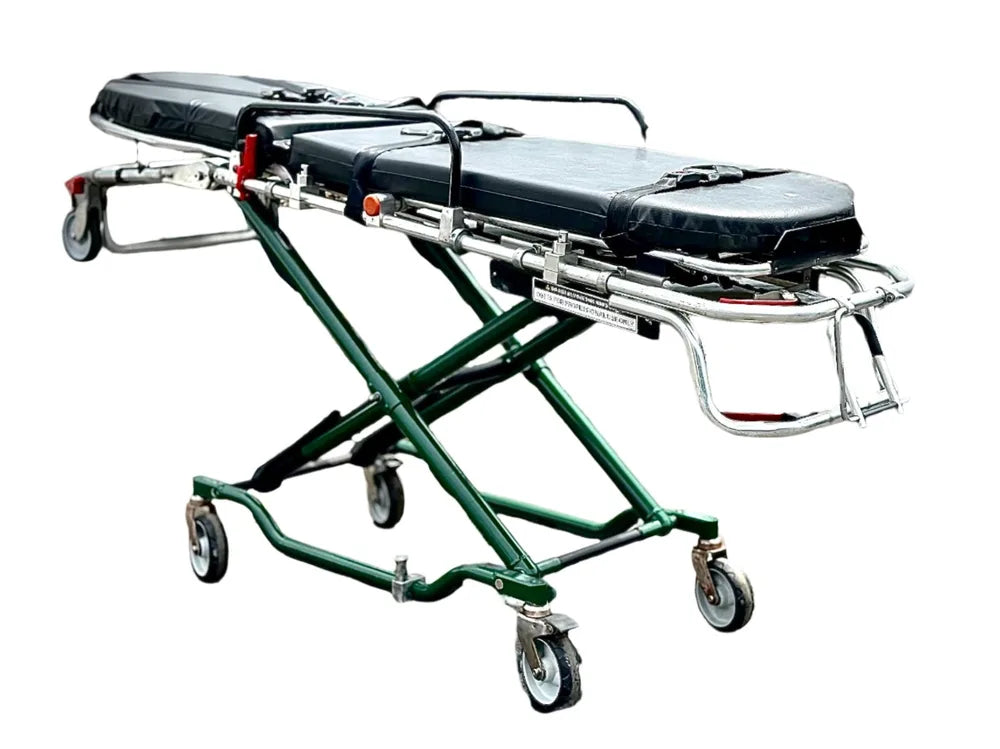
A cot that is out of service is a truck that is out of service, and most of that downtime comes from a short list of small parts. None of these parts is unusual or costly. The problem is usually that nobody has one on the shelf when it fails, so a ten-minute repair becomes a week of waiting for a shipment. This guide covers what wears, how to spot it early, and what is worth keeping in stock for the Stryker and Ferno cots most agencies run.
Shop All Cot & Stair Chair PartsParts by Equipment
Why Small Parts Cause Big Downtime
An ambulance cot is lifted, dropped, rolled over curbs and locked into a fastener thousands of times a year. The frame and hydraulics are built for that. The parts that take the abuse are the ones that touch the ground, the ones that slide, and the ones a crew handles under time pressure. They are inexpensive individually, but when one fails the cot usually cannot be used safely until it is replaced, and a cot with a bad caster lock or a torn restraint is a liability on the next call.
The Parts That Wear Out First
Casters, Wheels and Lock Pedals
Wheels pick up grit, lose tread and eventually develop flat spots that make the cot pull to one side. Caster lock pedals are kicked repeatedly through a shift and the springs and pawls inside them wear until the lock will not hold. Signs to watch: a cot that drifts on a level floor, a wheel that squeals or wobbles, or a lock pedal that feels soft. A full set of four wheels is one of the most useful items to stock.
Bearings and Sliders in the Lift Mechanism
Powered and manual cots both rely on bearings and slider blocks where the lift frame pivots and where the undercarriage telescopes. On Power-PRO cots the magnetic sliders and half-shell bearings are the usual wear points. When they wear, the cot rises unevenly, chatters as it lifts, or shows play in the frame when it is loaded. Replacing them before they fail protects the far more expensive hydraulic and frame components around them.
Bumpers and Frame Guards
Bumpers absorb impacts from door frames, the rig’s bumpers and tight hallways. Once they crack or go missing, the frame underneath starts taking the damage instead. They are inexpensive and quick to swap, so replace them the first time you notice one split.
Mattresses and Restraint Straps
Mattresses crack at the seams and lose their foam after a couple of years of cleaning chemicals and patient weight. Restraint straps and buckles fray, stiffen and fail inspection. Both are soft goods, both are consumables, and both are the first thing an inspector looks at. Keep a spare set of straps per cot and plan to replace mattresses on a schedule rather than waiting for one to split.
Batteries and Chargers on Powered Cots
SMRT Paks and similar cot batteries lose capacity gradually, then suddenly. If a cot that used to run a full shift now needs a swap mid-day, the battery is nearing the end of its life. Chargers fail less often, but when they do, every battery in the station is affected. One spare battery per powered cot, plus a spare charger per station, is a reasonable minimum.
Oxygen Bottle Holders, IV Poles and Clips
The accessories mounted on the cot are bent and broken more than the cot itself. An oxygen holder with a missing retainer or an IV pole that will not lock is a minor issue until a bottle rolls across the floor of the rig during transport.
How to Spot Wear Before It Takes a Cot Out of Service
- Inspect the cot weekly: roll it on a level floor, lock each caster, raise and lower it through the full range, and listen for chatter.
- Check that every strap buckles and releases cleanly and that the webbing is not frayed or stiff.
- Look at the mattress seams for splits, and at the underside of the frame and the bumpers for cracks.
- On powered cots, note how many lifts a battery delivers on a charge and watch for the number dropping.
- Keep the fastener in the truck clean; a fastener full of grit wears the cot's locking hardware.
What to Keep on the Shelf
For a service running two or more cots of the same model, a small parts kit pays for itself the first time it is used:
- One full set of wheels and at least two caster lock assemblies
- Slider blocks or bearings for the lift mechanism of your model
- A pair of bumpers and any frame guards that fit your cot
- One spare mattress and two sets of restraint straps
- One spare battery per powered cot and a spare charger
- Retainers and clips for the oxygen holder and IV pole
Order by Part Number
The fastest way to order a part is by the manufacturer’s part number, from the parts manual or stamped on the old part, so we can match it exactly. If you know the part numbers, send them through Request a quote and we price several at once; on the home page you can also type part numbers with quantities into Quick order and add them all to the cart together. If you do not know the number, send a photo of the part and your cot model and serial number, and we identify it before you buy.