

A low air loss mattress moves a steady flow of air through the support surface, and that's the whole point of it, keeping skin dry and taking pressure off the spots where sores tend to start. These systems are built for patients who spend long stretches in bed and can't shift their own weight. If you manage a care setting where pressure injuries are a real risk, this is the category you should be looking at first.
Why a Low Air Loss Mattress Matters for At-Risk Patients
Pressure builds up fast when a patient stays in one position. Skin over the heels, hips and tailbone takes the worst of it. A low air loss mattress addresses this by pushing air through the surface to reduce moisture and redistribute weight, which helps the skin stay intact.
Most facilities reach for these when a patient is bedbound, has limited mobility, or already shows early signs of skin breakdown. They're not a cure for anything. They're a support surface designed to lower the conditions that lead to pressure ulcers, and that distinction matters when you're documenting care.
Types of Low Air Loss Mattress Systems to Consider
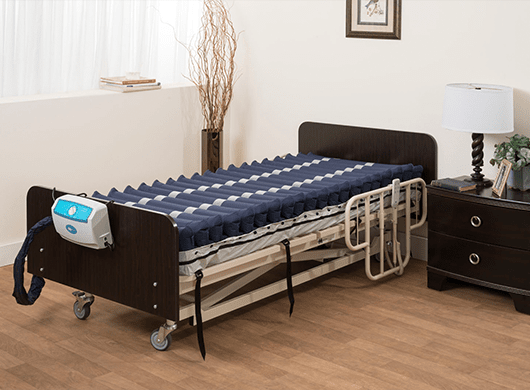
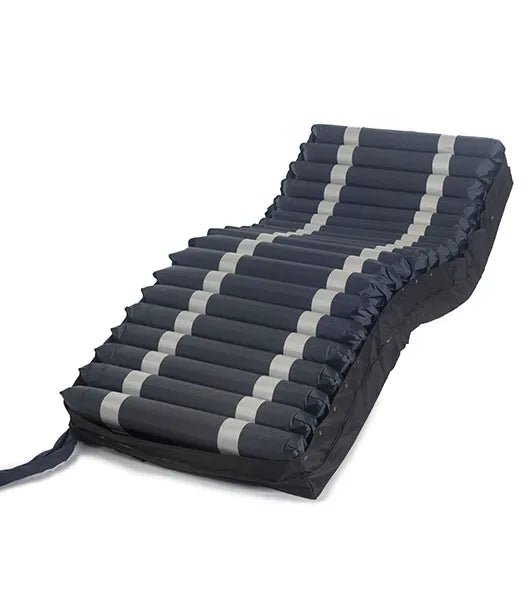
There's more variety in this category than people expect. Alternating pressure and low air loss systems get grouped together a lot, but they work differently. True low air loss surfaces focus on airflow and moisture control. Alternating pressure adds inflating and deflating cells to shift the load over time. Plenty of modern systems combine both.
You'll also find:
- Standard-width models for typical hospital and homecare frames
- Bariatric mattresses built for heavier weight capacities and wider frames
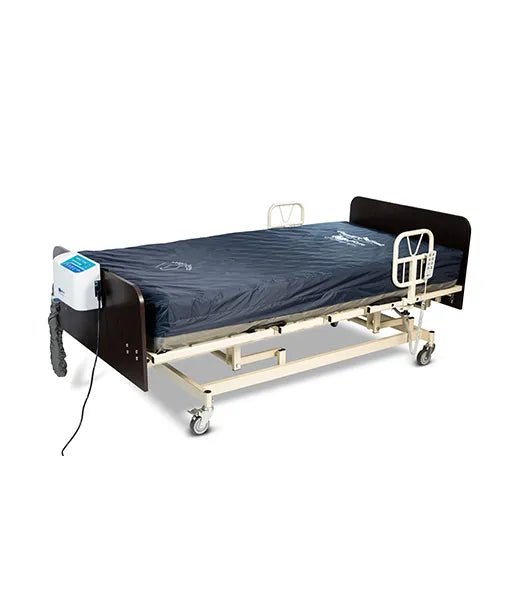
- Powered systems with a control unit, sized to the frame and patient
The mattress needs to match the bed. A surface that doesn't fit the frame does nobody any good, so check dimensions against your existing Beds and Mattresses inventory before you order.
Who Buys Low Air Loss Mattresses
Hospitals order these in volume for long-term and post-surgical units where immobility is common. Wound care teams tend to be the ones specifying the model.
Homecare providers and families managing care at home are a big part of this market too. They're usually looking for a system that fits a homecare bed and runs quietly enough to live with day and night.
Nursing homes and rehab facilities buy for the same reasons hospitals do, just at different scale. And bariatric care programs need surfaces rated for higher weight, which is a separate spec conversation entirely. If you're outfitting a facility, it helps to look at the full range of patient transport equipment and patient lift slings at the same time, since the same at-risk patients usually need all three.
What to Look For When You Choose One
Start with weight capacity. It's the number people skip past and regret later. Match it honestly to your patient population, and if you serve bariatric patients, don't guess, buy the rated system.
Next, look at the control unit. A good pump is quiet, easy to set, and holds pressure reliably. Cheap units are loud and drift out of setting, which means staff constantly re-checking them. Replaceable covers matter more than most buyers think, because covers wear out long before the mattress does and a low-moisture, wipeable cover keeps infection control happy.
Here's my honest take: skip the bargain-bin foam-only options if your patients are genuinely high-risk. They cost less up front and cost more in outcomes.
Low Air Loss vs Alternating Pressure: Which One
People treat this as an either-or, and it usually isn't. If moisture is your main concern, dry skin, incontinence, wound healing environments, a true low air loss mattress is the stronger pick. If the patient mainly needs weight shifted because they can't reposition themselves, alternating pressure earns its keep.
For most high-risk cases, I'd point buyers toward a combination system. You get airflow and pressure redistribution in one surface, and you're not stuck choosing between two things the patient actually needs. The price sits higher, but it covers more scenarios, and that flexibility pays off across a mixed patient load. Take a look at what's on the shelf and match it to the patients in front of you.
Frequently Asked Questions
Q: What does a low air loss mattress actually do?
A: It circulates air through the support surface to reduce moisture against the skin and help redistribute pressure. This is designed to lower the risk factors tied to pressure injuries in patients who can't reposition themselves. It supports skin integrity but isn't a treatment on its own.
Q: What's the difference between low air loss and alternating pressure mattresses?
A: Low air loss focuses on airflow and moisture control to keep skin dry. Alternating pressure uses cells that inflate and deflate to shift weight over time. Many current systems combine both features in a single mattress, which covers a wider range of patient needs.
Q: Who typically needs a low air loss mattress?
A: Bedbound patients, post-surgical cases, and anyone with limited mobility or early skin breakdown. Hospitals, nursing homes, rehab centers and homecare providers are the main buyers. Bariatric patients need a version specifically rated for higher weight capacities.
Q: How do I choose between a budget model and a premium system?
A: Look at weight capacity, pump reliability, and cover quality first. Budget foam-only options save money up front but fall short for genuinely high-risk patients. For those cases, a powered low air loss or combination system is worth the higher price because it addresses moisture and pressure at the same time.




Shop by Collection
- Stryker Stretchers
- Ambulance Stretchers
- Ferno Stretchers
- Used Ferno Stretchers
- Stryker Power-PRO XT
- Stryker Power-PRO 2
- Stryker MX-PRO
- Stryker Electric Stretchers
- Stryker Stair Chairs
- Ferno Stair Chairs
- Stryker Powered Stair Chairs
- Stryker Accessories
- Stryker Stretcher Parts
- Stryker Parts Online
- Stryker Fasteners
- Ferno Accessories
- Ferno Stair Chair Parts
- Stretcher Straps
- Stryker Stretcher Mattresses
- Wheelchair Lift Parts
- Braun Wheelchair Lift Parts
- LIFEPAK 15
- LUCAS Chest Compression
- Medical Devices
- Spine Boards
- Scoop Stretchers
- Transfer Boards
- ZOLL
- Patient Transport Equipment
- Stryker
- Ferno